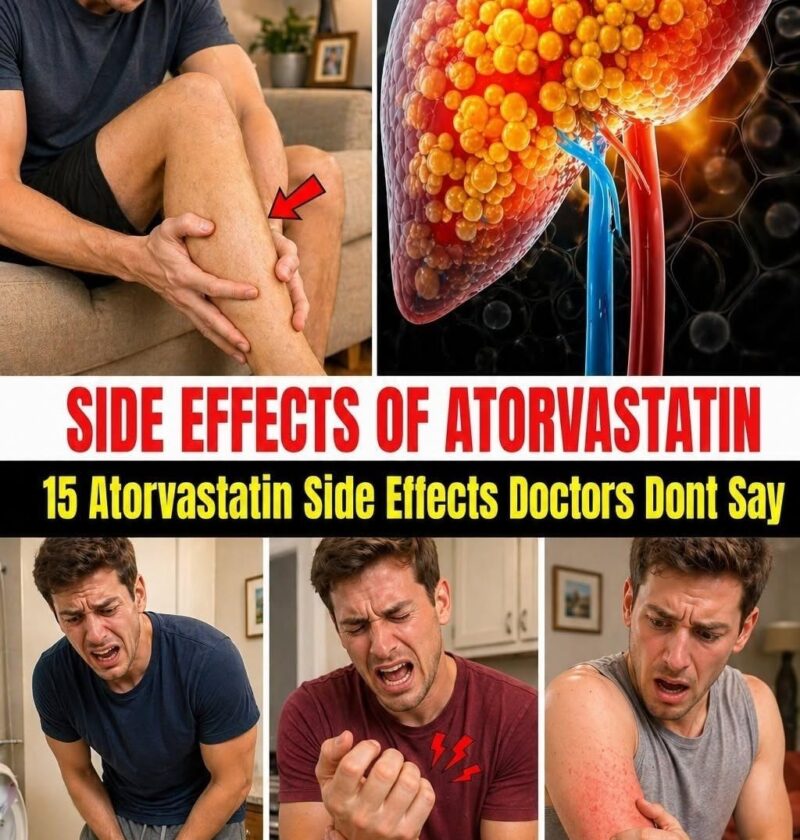
That headline is exaggerated. Atorvastatin is one of the most widely studied cholesterol-lowering medicines, and its side effects are well documented. Doctors do discuss them—viral posts just present them in a dramatic “hidden dangers” format.
Here’s a clear, realistic breakdown.
👍 Common (usually mild) side effects
These are the ones most people hear about:
- Muscle aches or mild soreness
- Headache
- Digestive issues (nausea, gas, constipation, diarrhea)
- Slight increase in liver enzymes (usually temporary)
Most people either don’t get these or can manage them.
⚠️ Less common but important
- Muscle inflammation (myopathy)
Muscle pain with weakness, not just soreness - Increased blood sugar risk
Small increased risk of developing type 2 diabetes in some people - Liver irritation
Rare, but doctors may monitor liver function tests
🚨 Rare but serious (seek medical attention)
- Rhabdomyolysis (very rare)
Severe muscle breakdown causing:- intense muscle pain
- dark urine
- weakness
This is uncommon but serious.
- Severe allergic reactions (very rare)
🧠 “Hidden dangers” claims—what’s true?
Most “15 hidden dangers” lists online:
- exaggerate rare risks
- mix unrelated symptoms
- ignore how rare serious side effects actually are
In reality, for most patients:
👉 Benefits (reducing heart attack and stroke risk) far outweigh risks.
💊 Why doctors prescribe it so often
Atorvastatin reduces LDL cholesterol, which helps prevent:
- heart attacks
- strokes
- artery blockage from Atherosclerosis
That preventive effect is strongly proven in large clinical studies.
🧠 Bottom line
Atorvastatin is not risk-free, but it is well-studied and generally safe when monitored. Most side effects are mild, and serious ones are rare.
If you want, I can also explain how to tell normal muscle soreness from statin-related muscle problems—that’s one of the most common real concerns people have.