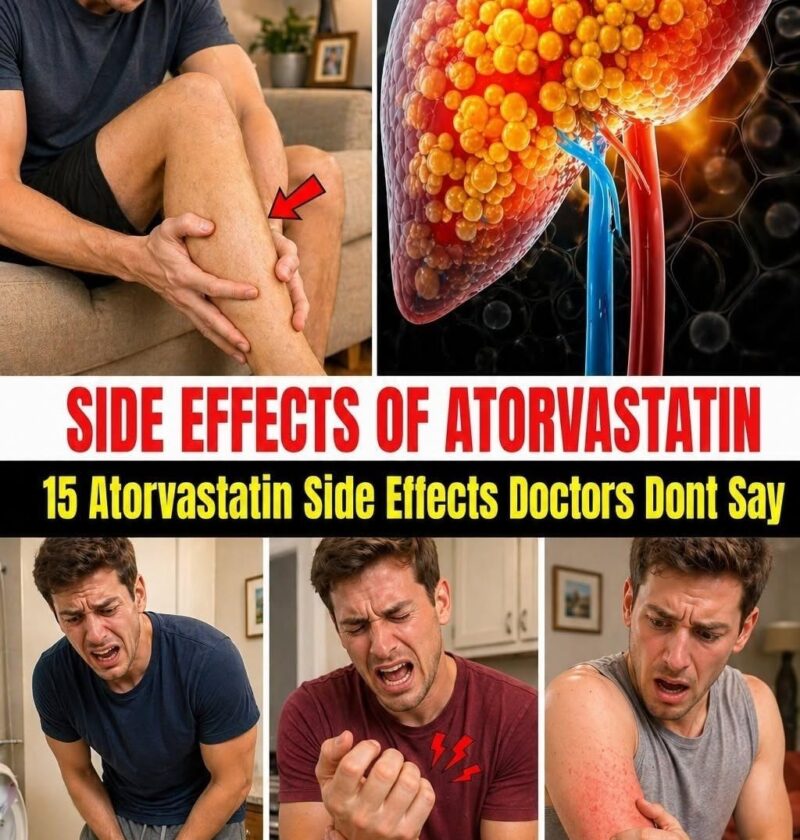
Headlines like “15 Hidden Dangers Your Doctor May Not Tell You About” are often designed to attract clicks. In reality, Atorvastatin is one of the most extensively studied medications for lowering cholesterol, and healthcare professionals routinely discuss its known benefits and risks.
Here are the side effects and risks supported by medical evidence:
- Muscle aches or soreness – The most commonly reported side effect. It is usually mild but should be evaluated if severe or persistent.
- Muscle weakness (myopathy) – Less common; may be associated with elevated muscle enzymes.
- Rhabdomyolysis – A very rare but serious condition involving muscle breakdown that requires urgent medical attention.
- Digestive symptoms – Such as nausea, diarrhea, constipation, or stomach discomfort.
- Headache
- Mild fatigue
- Increased liver enzymes – Usually without symptoms; significant liver injury is very uncommon.
- Slight increase in blood sugar – May slightly raise the risk of developing Type 2 Diabetes in people already at high risk.
- Occasional memory problems or confusion – Reported by some patients, but evidence for a direct causal relationship is limited, and symptoms are generally reversible if related.
- Sleep disturbances – Such as insomnia or vivid dreams in some people.
- Joint pain
- Skin rash or itching – Uncommon and usually mild.
- Rare allergic reactions – Seek immediate medical care for swelling, difficulty breathing, or severe rash.
- Drug interactions – Some antibiotics, antifungals, antiviral medications, and large amounts of grapefruit juice can increase atorvastatin levels and the risk of side effects.
- Rare immune-mediated muscle disease – An extremely uncommon autoimmune condition causing persistent muscle weakness that requires specialist treatment.
When to seek medical attention
Contact your healthcare provider promptly if you experience:
- Severe or worsening muscle pain or weakness
- Dark or cola-colored urine
- Yellowing of the skin or eyes
- Severe abdominal pain
- Difficulty breathing or swelling of the face, lips, or tongue
Putting the risks in context
For people with high cholesterol or cardiovascular disease, atorvastatin has been shown to substantially reduce the risk of heart attacks, strokes, and cardiovascular death. For most patients, these proven benefits outweigh the relatively low risk of serious side effects.
If you’re taking atorvastatin and develop bothersome side effects, don’t stop it on your own. Your healthcare provider may be able to adjust the dose, evaluate other possible causes, switch to a different statin, or recommend another cholesterol-lowering medication if appropriate.