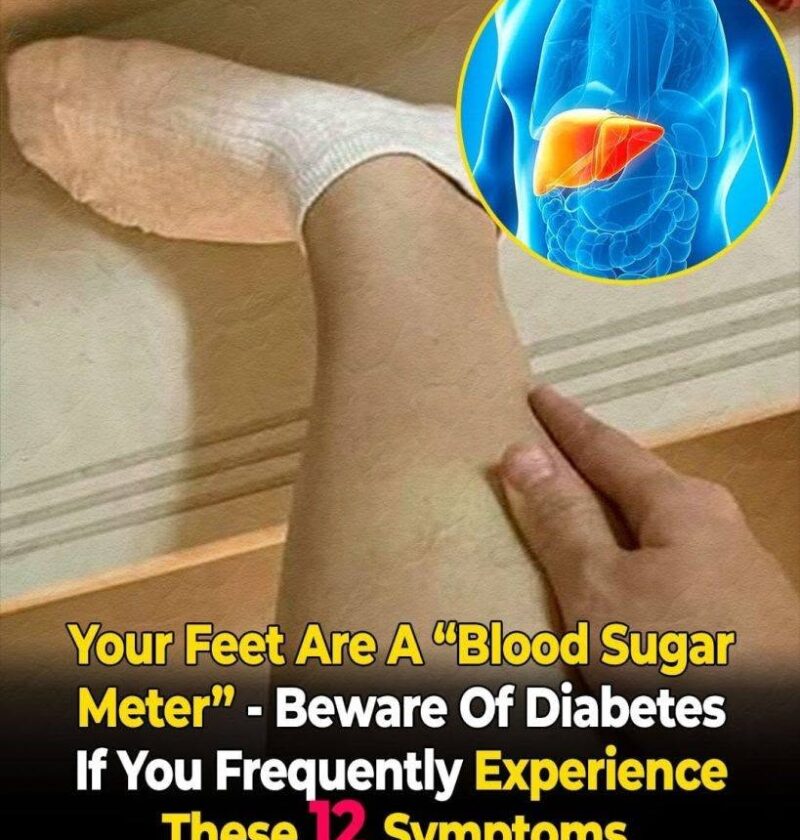
The claim that “your feet are a blood sugar meter” is misleading. Your feet cannot diagnose diabetes. However, diabetes can affect the nerves and blood vessels in the feet, so certain foot symptoms can be warning signs that deserve medical attention.
Here are 12 foot-related symptoms that can occur in people with diabetes or prediabetes:
- Numbness in the feet or toes.
- Tingling or “pins and needles” sensations.
- Burning pain, especially at night.
- Reduced ability to feel heat, cold, or pain, increasing the risk of unnoticed injuries.
- Slow-healing cuts, blisters, or sores.
- Frequent foot infections, including skin or nail infections.
- Dry, cracked skin, which can increase the risk of infection.
- Changes in skin color or temperature, which may indicate circulation problems.
- Foot swelling, especially if it is new or persistent.
- Pain in the legs or feet when walking that improves with rest, which may suggest poor circulation.
- Foot deformities, such as changes in the shape of the foot over time due to nerve damage.
- Ulcers (open sores), particularly on the bottom of the foot, which require prompt medical care.
These symptoms are not specific to diabetes. They can also result from nerve compression, vitamin deficiencies, poor circulation from other causes, infections, or other medical conditions.
Other common symptoms of diabetes
In addition to foot problems, watch for:
- Type 2 Diabetes symptoms such as increased thirst
- Frequent urination
- Increased hunger
- Unexplained weight loss
- Blurred vision
- Fatigue
- Frequent infections
When to see a healthcare professional
If you have persistent foot numbness, burning, sores that do not heal, or several symptoms suggestive of diabetes, it’s important to arrange a medical evaluation. A simple blood test, such as a fasting blood glucose or Hemoglobin A1c, can help determine whether diabetes or prediabetes is present.
If you already have diabetes, inspect your feet daily, wear properly fitting shoes, keep your feet clean and moisturized (avoiding lotion between the toes), and seek prompt care for any cuts, blisters, or ulcers. Early treatment can help prevent serious complications.