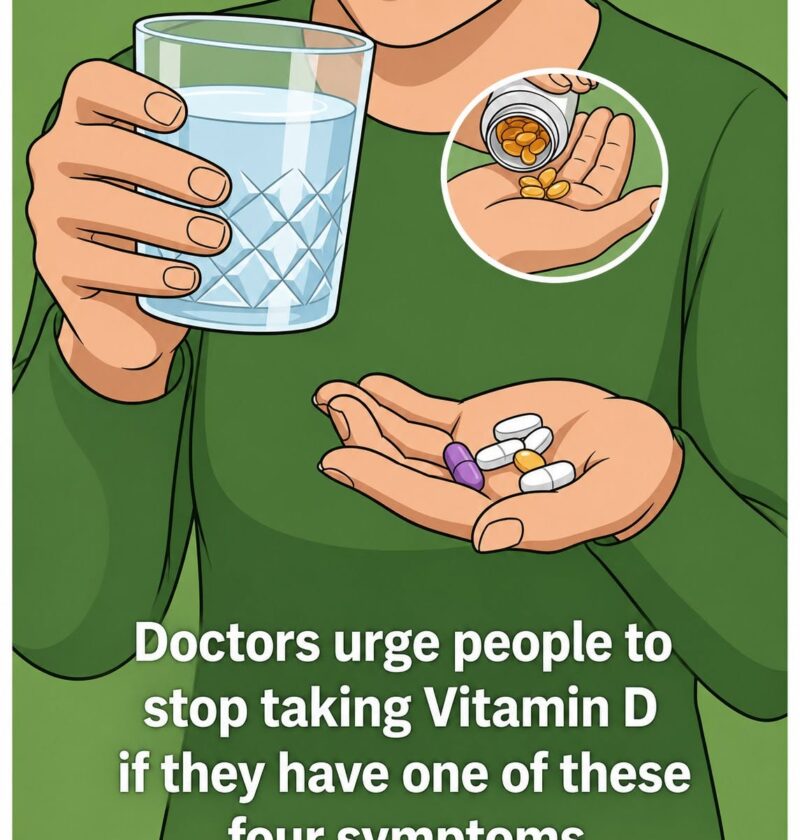
That kind of headline is designed to sound urgent, but it’s usually overstated and not medically accurate as a blanket rule.
You should not automatically stop vitamin D just because of vague “warning symptoms.” Instead, you look at dose, duration, and blood calcium/vitamin D levels.
Here’s what doctors actually mean behind these posts.
☀️ Vitamin D is generally safe
When taken at normal doses, vitamin D is:
- Commonly prescribed worldwide
- Important for bones, muscles, immunity
- Safe for most people
Problems mainly happen with excessive long-term intake.
⚠️ Symptoms that could suggest too much vitamin D (usually due to high calcium levels)
If someone is taking very high doses, possible warning signs include:
1. Nausea or vomiting
- Often due to elevated calcium levels
2. Unusual weakness or fatigue
- Can happen when calcium is too high
3. Frequent urination or excessive thirst
- Kidneys working harder to remove excess calcium
4. Confusion or brain fog (in severe cases)
- Usually only in significant toxicity
🧠 Important reality check
- These symptoms are not specific to vitamin D
- They can be caused by many conditions (infection, dehydration, diabetes, etc.)
- Vitamin D toxicity is rare and usually happens only with:
- Very high doses for months
- Multiple supplements combined
- No medical monitoring
💊 What doctors actually recommend
Instead of “stop immediately,” guidance is usually:
- Check blood vitamin D (25-OH D) and calcium levels
- Adjust dose if needed
- Stop or reduce only under medical advice if levels are high
🚨 When to be cautious
Extra care is needed if you:
- Take high-dose supplements (e.g., 10,000 IU+ daily long term)
- Have kidney disease
- Take calcium supplements too
- Have unexplained symptoms above
✔️ Bottom line
These posts exaggerate. Vitamin D is not something most people need to fear or suddenly stop. Real safety depends on dose + blood levels + medical supervision, not just generic symptoms.
If you want, I can tell you how much vitamin D is actually safe per day for different age groups, or how to tell if you might be deficient instead of overdoing it.