The color of urine can give useful clues about hydration and sometimes health issues, but it’s not a diagnosis on its own. It mainly reflects how concentrated your urine is and whether certain substances are present.
Here’s a simple guide:
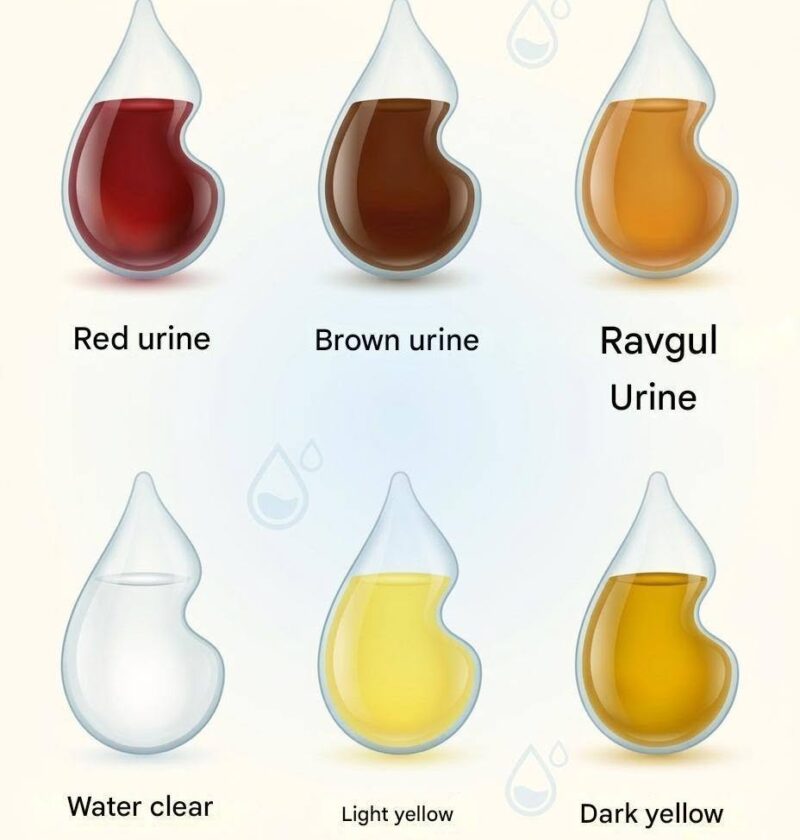
💧 1. Clear urine
- Usually means very well hydrated
- If it’s constantly clear, you might be drinking more water than needed
💛 2. Pale yellow (ideal)
- Best “normal” range
- Indicates good hydration and healthy kidney function
🌼 3. Dark yellow / amber
- Often means dehydration
- Urine is more concentrated
👉 Common causes:
- Not drinking enough water
- Sweating a lot
- Fasting or illness
🧡 4. Orange
Can be harmless or a warning sign:
- Dehydration
- Certain medications or vitamins
- Sometimes liver or bile issues if persistent
❤️ 5. Pink or red
Possible causes:
- Beets, berries, food dyes
- Blood in urine (important to check)
🚨 If not food-related, it may indicate:
- infection
- kidney stones
- bladder issues
🟤 6. Brown or cola-colored
Can be more serious:
- severe dehydration
- liver problems
- muscle breakdown (rare but serious)
💚 7. Green or blue (rare)
Usually due to:
- food coloring
- certain medications
- rare infections
⚠️ When to see a doctor
Seek medical advice if:
- red/pink urine is unexplained
- dark urine persists despite hydration
- pain, burning, fever, or back pain occurs
🧠 Bottom line
Most urine color changes are related to hydration and diet, not serious disease—but persistent unusual colors should be checked.
If you want, I can also give you a quick “hydration test” using urine color that doctors often use in clinics.