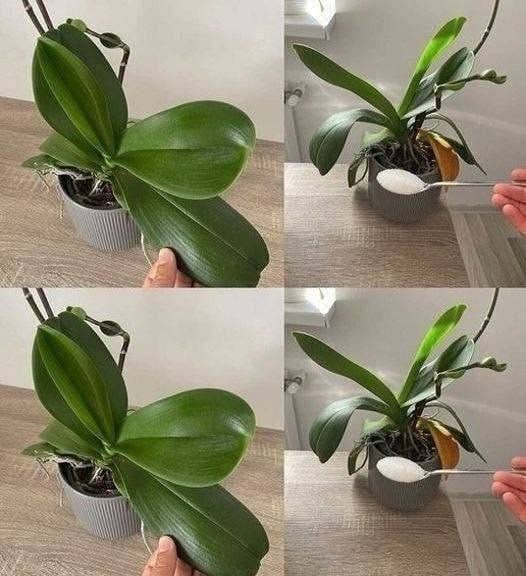
That claim is misleading. There isn’t a single “one tablespoon” fertilizer that will make orchids bloom continuously.
For healthy Orchid, here’s what actually helps:
- Use an orchid fertilizer that’s specifically formulated for orchids, following the label directions. A common recommendation is to fertilize at ¼ to ½ strength every 1–2 weeks during active growth.
- Provide enough light. Many orchids, especially Phalaenopsis, need bright, indirect light to produce flower spikes.
- Water correctly. Let the potting mix approach dryness before watering again. Avoid leaving roots sitting in water.
- Use the right potting medium. Orchids usually grow best in bark, sphagnum moss, or other airy mixes rather than regular potting soil.
- Maintain suitable temperatures. Many orchids need a slight drop in nighttime temperature to trigger blooming.
Regarding homemade fertilizers:
- Some people recommend diluted rice water, banana peel water, or other kitchen ingredients, but there is little scientific evidence that these reliably improve flowering. They can also encourage mold or pests if overused.
- If you use any homemade solution, do so sparingly and don’t replace a balanced orchid fertilizer with it.
With proper care, many moth orchids bloom once or twice a year, and the flowers can last for 2–4 months. Continuous blooming year-round is not a realistic expectation for most orchids.