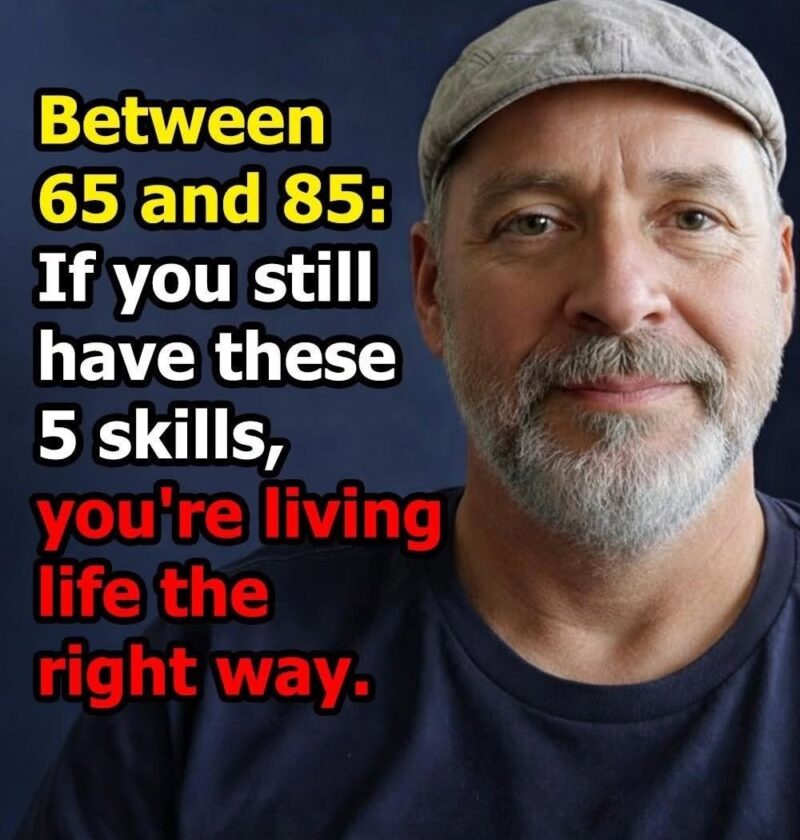
Here are five skills that, if you still have them in that age range, suggest you are aging better than most people.
1. Strong Walking Ability and Balance
Being able to walk steadily without frequent support is one of the strongest predictors of healthy aging.
This includes:
- Walking at a reasonable pace (not shuffling or overly slow)
- Being able to turn without losing balance
- Climbing a few stairs without major difficulty
Good mobility is closely tied to lower risk of falls, hospitalization, and loss of independence.
2. Good Grip Strength
Grip strength is more than hand power—it reflects overall muscle health.
You are likely doing well if you can:
- Open jars with effort but without assistance
- Carry grocery bags without strain
- Maintain steady hand control for daily tasks
Lower grip strength is strongly associated with frailty and declining physical resilience.
3. Clear Thinking and Decision-Making
Cognitive clarity is a major marker of healthy aging.
This includes:
- Managing money and bills without confusion
- Following conversations and instructions
- Making reasonable judgments in daily situations
Occasional forgetfulness is normal, but consistent confusion or disorientation is not.
4. Ability to Perform Daily Activities Independently
This refers to basic self-care tasks, often called “activities of daily living.”
Examples:
- Bathing and dressing without help
- Cooking simple meals
- Managing medications correctly
Maintaining independence in these tasks is a strong indicator of functional aging.
5. Stable Emotional Health and Social Engagement
Mental and social well-being matter as much as physical ability.
Signs include:
- Maintaining relationships or regular contact with others
- Feeling purpose or interest in daily life
- Not experiencing persistent withdrawal or isolation
Social engagement is strongly linked to longer lifespan and better cognitive outcomes.
Key Insight
If someone between 65 and 85 still has these five skills, they are generally in the higher-functioning segment of their age group. Loss of one area does not define aging quality—but multiple losses together often signal increased frailty risk.
If you want, I can also explain:
- The “frailty index” doctors use
- Early warning signs of functional decline
- Or exercises and habits that help preserve these abilities after 60