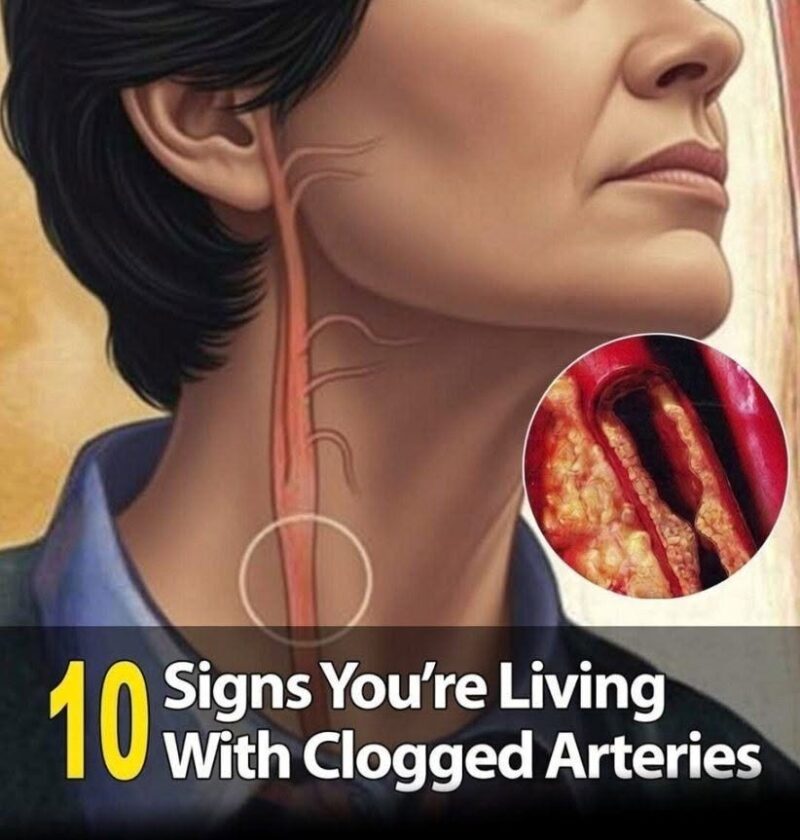
When headlines say “blocked arteries,” they’re usually referring to Atherosclerosis. It develops slowly over time and can affect the heart, brain, and legs.
The tricky part is: it often has no symptoms until it becomes serious, but there are warning signs that should not be ignored.
⚠️ 10 possible indicators of narrowed/blocked arteries
❤️ 1. Chest discomfort or pressure
- Tightness, heaviness, or pain (especially during activity)
- May signal reduced blood flow to the heart
😮💨 2. Shortness of breath
- Getting winded more easily than before
- Especially during light exertion
😴 3. Unusual fatigue
- Feeling tired even with normal activity
- Can be an early sign of reduced circulation
🦵 4. Leg pain while walking
- Cramping or pain in calves/thighs
- Improves with rest (called “claudication”)
🧊 5. Cold hands or feet
- Poor circulation to extremities
🧠 6. Dizziness or lightheadedness
- Possible reduced blood flow to the brain
🧠 7. Sudden weakness or numbness (one side)
- Can be a warning sign of a mini-stroke (TIA)
👁️ 8. Vision changes
- Blurred vision or temporary loss of vision
❤️ 9. Irregular heartbeat or palpitations
- Heart working harder due to restricted flow
🩸 10. Slow-healing wounds
- Especially on legs or feet (poor circulation)
🧠 Important reality check
- Many of these symptoms can also come from non-artery-related issues
- One symptom alone does not confirm blockage
- Risk increases if you also have:
- Smoking history
- Diabetes
- High blood pressure
- High cholesterol
🚨 When to seek urgent help
Get immediate medical attention if there is:
- Chest pain with sweating or nausea
- Sudden weakness or speech difficulty
- Severe shortness of breath
👍 Bottom line
Blocked arteries usually develop silently, so the real focus is risk control and early checkups, not just symptom watching.
If you want, I can explain simple tests doctors use to detect blocked arteries early, or how to reduce risk with lifestyle changes that actually work.