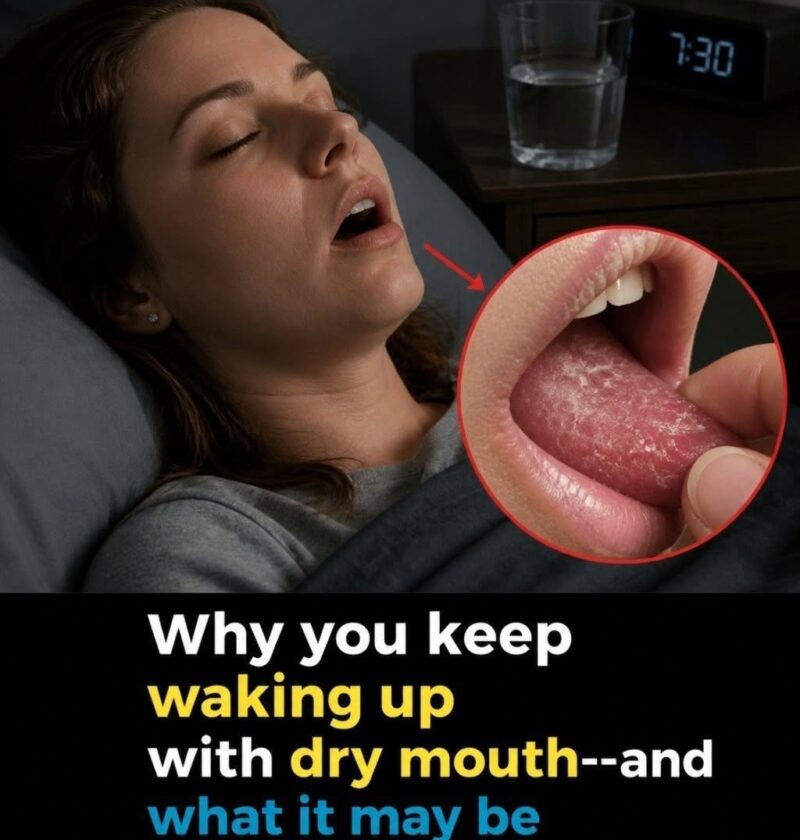
Waking up with a dry mouth is common, and it usually points to simple issues like breathing habits or hydration—not a mysterious body signal. But it can sometimes hint at an underlying condition depending on how often it happens.
Here are the most likely causes:
1. Sleeping with your mouth open (most common)
If you breathe through your mouth at night:
- Saliva dries out faster
- You wake up with a dry, sticky mouth
Common reasons for mouth breathing:
- Nasal congestion (cold, allergies, sinus issues)
- Sleeping on your back
- Habitual breathing pattern
2. Dehydration
Not drinking enough fluids during the day can lead to:
- Reduced saliva production at night
- Stronger dryness in the morning
Worsens with:
- Hot weather
- Excess caffeine or alcohol
- Sweating without rehydration
3. Snoring or sleep apnea
If your airway partially closes during sleep:
- You may breathe through your mouth
- Saliva dries out quickly
Possible clues:
- Loud snoring
- Waking up tired
- Morning headaches
4. Medications
Some medicines reduce saliva, including:
- Antihistamines (allergy meds)
- Antidepressants
- Blood pressure medications (in some cases)
5. Dry air in the room
Environmental factors matter:
- Air conditioning
- Fans blowing directly at face
- Low humidity
These can dry out mouth and throat overnight.
6. Blood sugar issues (less common but important)
Persistent dry mouth can sometimes be linked to:
- High blood sugar levels (diabetes)
Other signs may include:
- Frequent urination
- Excess thirst
- Fatigue
When to pay attention
See a doctor if dry mouth is:
- Frequent and persistent
- Combined with loud snoring or choking at night
- Associated with excessive thirst or fatigue
- Affecting daily comfort or swallowing
Simple ways to improve it
- Drink enough water during the day
- Treat nasal congestion if present
- Avoid sleeping directly under a fan/AC
- Try sleeping on your side instead of back
- Use a humidifier if air is dry
Bottom line
Most cases of waking up with dry mouth come from mouth breathing, dehydration, or dry air. It is usually harmless, but persistent symptoms can sometimes point to sleep or metabolic issues.
If you want, I can help you narrow it down based on your situation (snoring, thirst, medications, etc.).