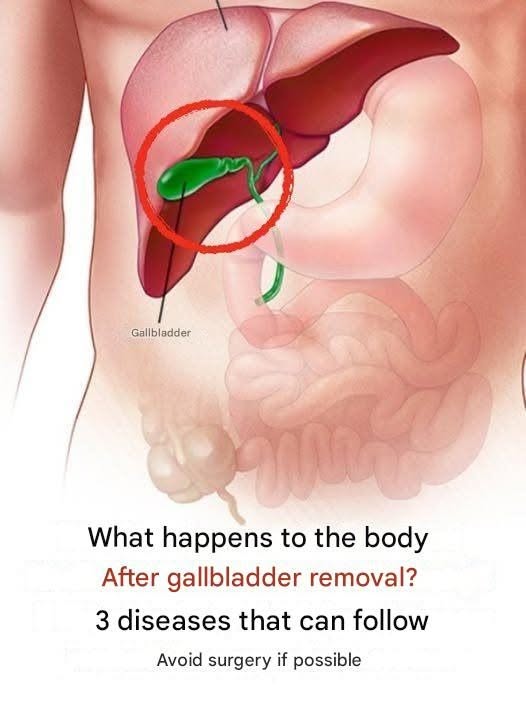
What changes after gallbladder removal?
- Digestion usually remains normal.
- Some people have temporary bloating, gas, or diarrhea, especially after fatty meals.
- The body often adapts over weeks to months.
3 Possible Complications
1. Diarrhea and Digestive Upset
A continuous flow of bile into the intestine can irritate the bowel in some people, leading to:
- Frequent loose stools
- Urgency to use the bathroom
- Bloating or abdominal discomfort
2. Bile Duct Problems
Although uncommon, complications can involve the bile ducts, such as:
- Bile leakage after surgery
- Narrowing (stricture) of a bile duct
- Retained gallstones in the bile ducts
Symptoms may include abdominal pain, fever, jaundice (yellowing of the skin or eyes), or nausea.
3. Post-Cholecystectomy Syndrome
A small number of people continue to experience symptoms similar to those they had before surgery, including:
- Upper abdominal pain
- Indigestion
- Nausea
- Bloating
These symptoms may be related to bile duct issues, digestive disorders, or other gastrointestinal conditions.
When to Seek Medical Attention
Contact a healthcare professional promptly if you develop:
- Severe abdominal pain
- Fever or chills
- Yellowing of the skin or eyes
- Persistent vomiting
- Dark urine or pale stools
Most people recover well after gallbladder removal, and serious long-term complications are relatively uncommon. If you’ve had your gallbladder removed and are experiencing symptoms, I can help explain what they might mean.