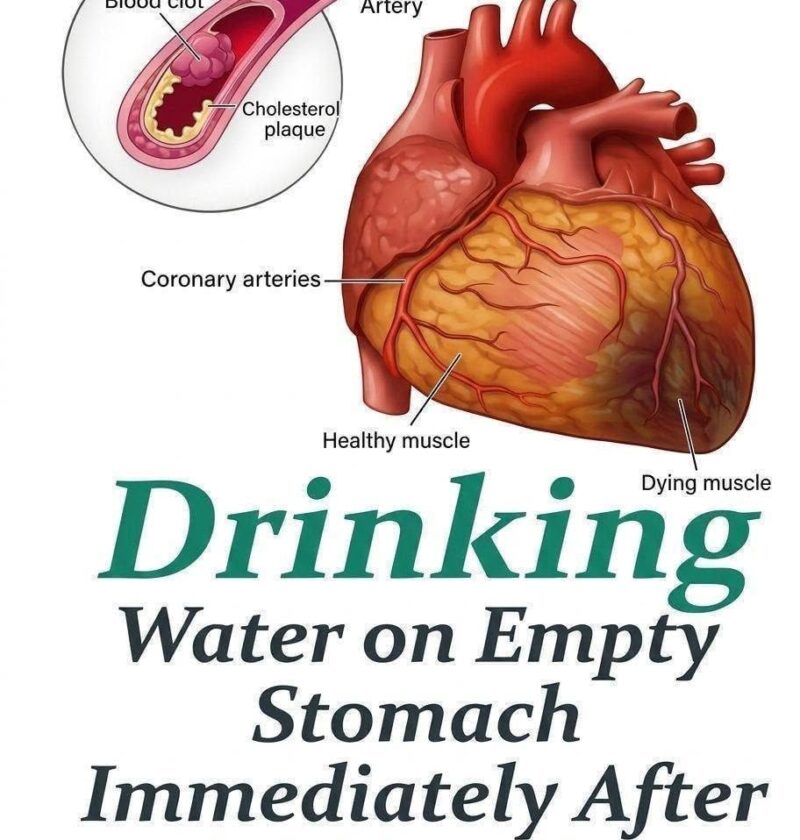
That phrase is another clickbait-style setup. “Drinking water on an empty stomach” is not dangerous or magical—it’s simply a normal habit, and its effects are often exaggerated online.
Here’s what actually happens:
What drinking water on an empty stomach really does
1. Rehydrates your body after sleep (real benefit)
After 6–8 hours without fluids:
- Your body is slightly dehydrated
- Drinking water helps restore fluid balance
This can improve:
- Alertness
- Digestion
- Headache prevention in some people
2. May slightly boost digestion
Water can:
- Help “wake up” the digestive system
- Support bowel movement in the morning
But it is not a detox or cure—just normal physiology.
3. No special “fat-burning” effect
A common myth is that it:
- Burns fat
- Speeds metabolism dramatically
- “Flushes toxins”
Reality:
- Any metabolism increase is minimal and temporary
- Your liver and kidneys already handle detoxification
Possible downsides (in some cases)
1. Drinking too much too fast
- Can cause mild nausea in some people
- Especially if the stomach is sensitive
2. Cold water sensitivity
- May trigger discomfort in people with digestive issues
When it’s especially helpful
- After waking up
- During hot weather
- If you wake up with dry mouth
- After alcohol consumption the night before
Bottom line
Drinking water on an empty stomach is healthy and beneficial for hydration, but it is not a miracle habit. It simply helps your body recover from overnight fluid loss.
If you want, I can explain:
- The best morning hydration routine
- Or how much water you actually need per day based on age and climate