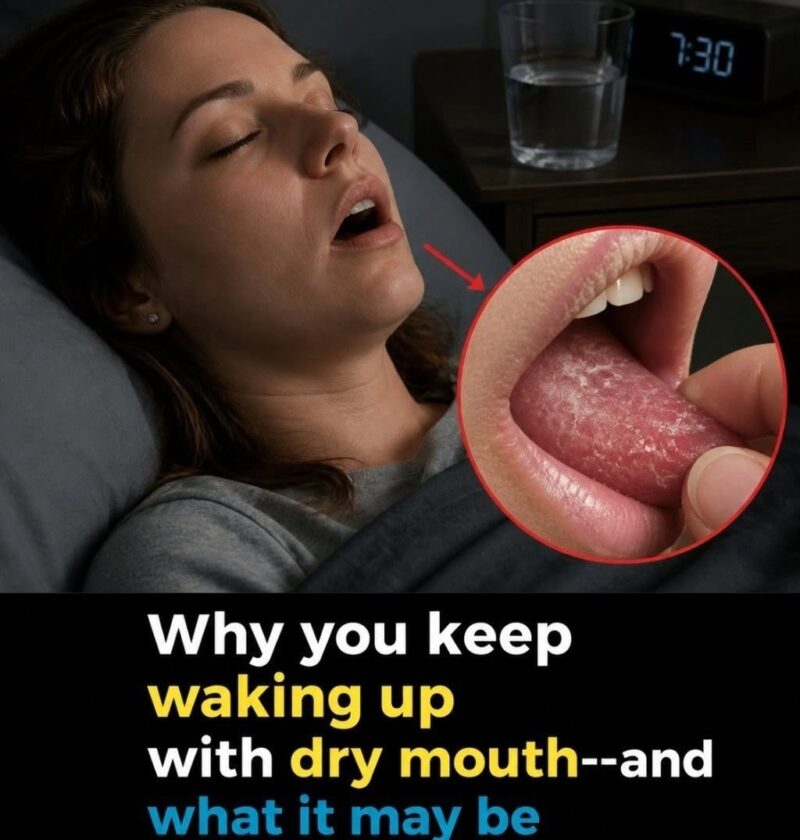
Waking up with a dry mouth is common, and most of the time it’s not dangerous—but it is a signal that something about your breathing, hydration, or sleep environment may be off.
Here’s what your body might actually be telling you:
😮💨 1. You’re breathing through your mouth at night (most common)
If your nose feels blocked while sleeping, your body switches to mouth breathing, which dries out saliva overnight.
Possible reasons:
- Nasal congestion (allergies, cold, sinus issues)
- Deviated septum
- Habitual mouth breathing during sleep
Clue: You may also wake up with a sore throat or cracked lips.
😴 2. Sleep apnea or disrupted breathing
In some cases, chronic mouth breathing is linked to sleep-related breathing issues like Obstructive sleep apnea, where airflow repeatedly drops during sleep.
Other signs:
- Loud snoring
- Morning headaches
- Feeling tired even after sleeping
(Not everyone with dry mouth has this—but it’s a pattern worth noticing.)
💧 3. Mild dehydration
If you’re not drinking enough fluids during the day, saliva production drops at night.
Common triggers:
- Not drinking enough water
- High caffeine intake
- Alcohol the night before
💊 4. Medications or supplements
Some common medicines reduce saliva, including:
- Antihistamines
- Antidepressants
- Blood pressure medications
🌬️ 5. Dry environment
- Sleeping with fan or AC directly blowing on you
- Low humidity in the room
This can dry out your mouth even if you’re well-hydrated.
🧠 6. Blood sugar issues (less common but important)
Persistent dry mouth along with:
- Frequent thirst
- Frequent urination
may be linked to blood sugar imbalance (worth checking if ongoing).
🧭 What you can do
Quick fixes:
- Drink water before bed (not excessive amounts)
- Use a humidifier or avoid direct fan/AC airflow
- Try nasal saline spray if your nose is blocked
- Brush and clean nose passages before sleep
If it keeps happening:
- Check for nasal congestion or allergies
- Consider sleep evaluation if snoring or fatigue is present
- Review medications with a doctor if relevant
⚠️ Bottom line
Occasional dry mouth is usually about mouth breathing or dehydration. If it’s frequent and paired with snoring, fatigue, or nasal blockage, it may point to a sleep or airway issue worth looking into.
If you want, tell me whether you also snore or wake up tired—I can help narrow down the most likely cause.