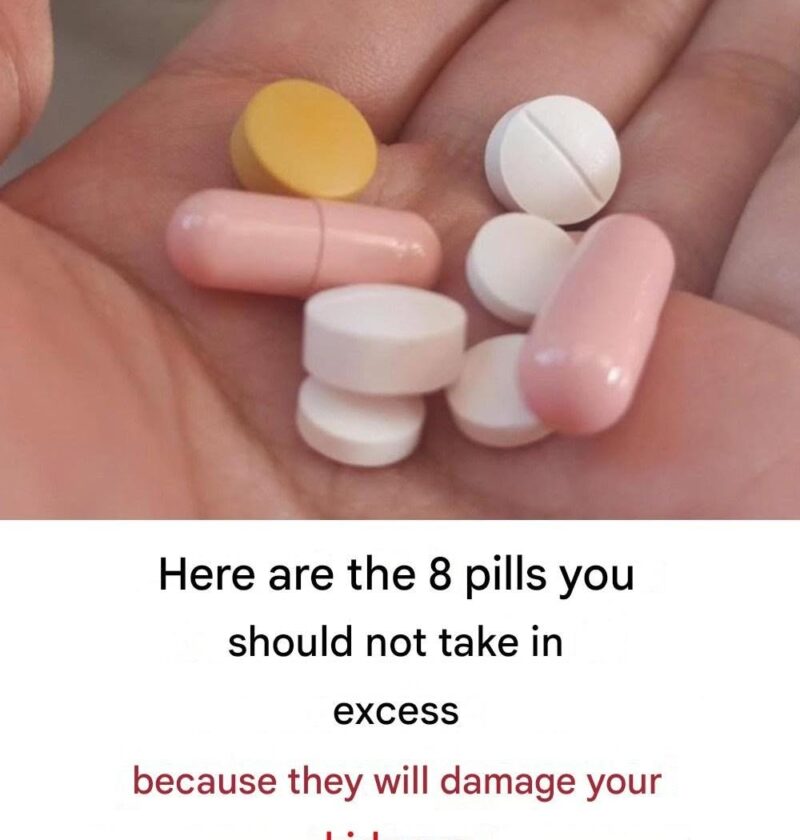
There isn’t a safe, universal list of “pills you should never take,” because almost any medication can be safe when used correctly and dangerous when misused or combined with the wrong conditions (like dehydration or existing kidney disease).
But there are well-known medications that can stress or damage the kidneys if overused or used in high-risk situations. Here are 8 commonly discussed ones:
1. Painkillers (NSAIDs)
Examples: ibuprofen, diclofenac, naproxen
These reduce blood flow to the kidneys if taken too often or in high doses, especially when dehydrated.
👉 Biggest risk: long-term or frequent use
2. Aspirin (high doses)
Low-dose aspirin is often safe medically, but high doses can strain kidney function.
3. Certain antibiotics
Examples: gentamicin, vancomycin
These can be nephrotoxic, especially in hospital-level doses or in people with existing kidney issues.
4. Contrast dye (used in scans)
Not a pill, but often overlooked. The dye used in CT scans can temporarily stress kidneys in vulnerable people.
5. Proton pump inhibitors (PPIs)
Examples: omeprazole, esomeprazole
Long-term use has been linked in some studies to kidney inflammation or chronic kidney issues in rare cases.
6. Some blood pressure medications (in specific situations)
Examples: ACE inhibitors like lisinopril or ARBs like losartan
These are actually kidney-protective in many patients—but can worsen kidney function if dehydration or blockage is present.
7. Lithium (for mood disorders)
A well-known medication that can affect kidney function over long-term use if not carefully monitored.
8. Certain herbal supplements (often overlooked “pills”)
Examples: aristolochic acid-containing herbs, unregulated detox pills
These are a major hidden cause of kidney damage in some regions.
Key reality check
Kidney damage usually happens because of:
- High doses
- Long-term misuse
- Mixing medications
- Dehydration
- Existing kidney disease
Not because the medicine is “bad” by itself.
When to be more careful
Extra caution is needed if someone has:
- Diabetes
- High blood pressure
- Chronic kidney disease
- Frequent dehydration
- Older age
If you want, I can also give you a “kidney-safe medicine guide” (what’s usually safest for pain, fever, and colds) or early warning signs of kidney stress people often ignore.