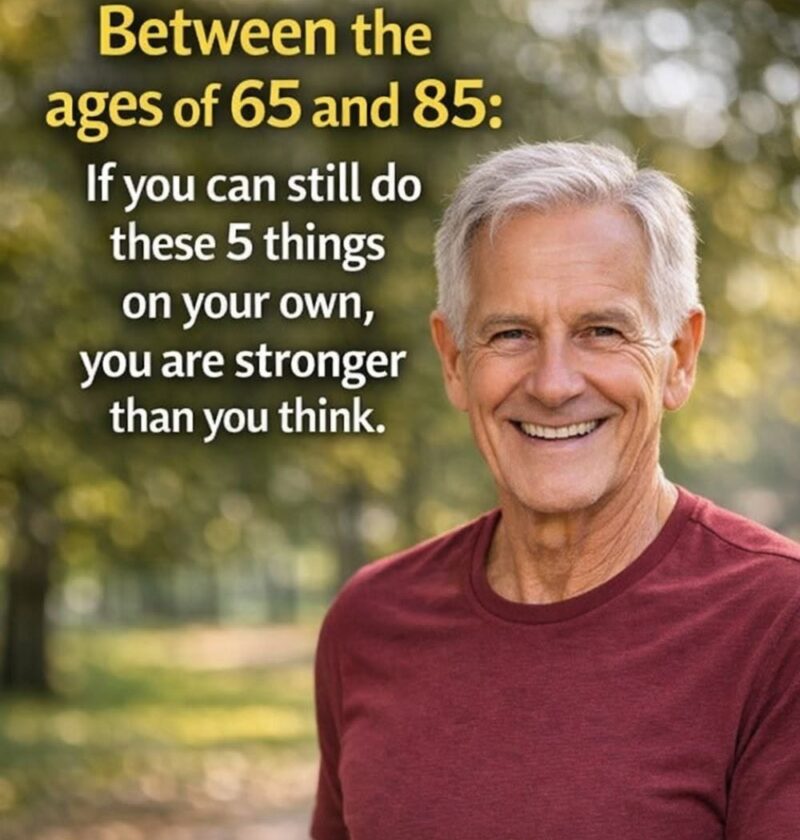
Articles with titles like this often exaggerate, but the underlying idea is reasonable: being able to perform certain physical and daily activities independently is associated with better health, mobility, and independence in older adults.
Here are five abilities that are commonly used to gauge functional fitness in adults aged 65–85:
- Getting up from a chair without using your hands
- This reflects leg strength, balance, and coordination.
- Difficulty with this task can be associated with a higher risk of falls.
- Walking at a steady pace
- Comfortable walking speed is a simple indicator of overall health and mobility.
- Slower walking speed has been linked to increased risk of disability and hospitalization.
- Maintaining balance
- For example, standing on one leg for a short period (if it’s safe to do so).
- Good balance helps reduce the risk of falls.
- Climbing stairs
- Being able to climb a flight of stairs without excessive shortness of breath or needing assistance suggests good lower-body strength and cardiovascular fitness.
- Managing daily activities independently
- Tasks such as bathing, dressing, preparing meals, shopping, and managing medications are key indicators of functional independence.
A few important points
- These are general indicators, not pass/fail tests or guarantees of health.
- Many healthy older adults may have arthritis, joint replacements, or other conditions that make one task difficult while still maintaining excellent overall health.
- If someone notices a new decline in strength, balance, or mobility, it’s worth discussing with a healthcare professional, as early intervention can often help.
Bottom line: If someone between 65 and 85 can perform these kinds of activities independently, it’s generally a positive sign of physical function and independence. However, overall health is influenced by many factors—including chronic conditions, cognitive health, nutrition, and social support—not just these five abilities.