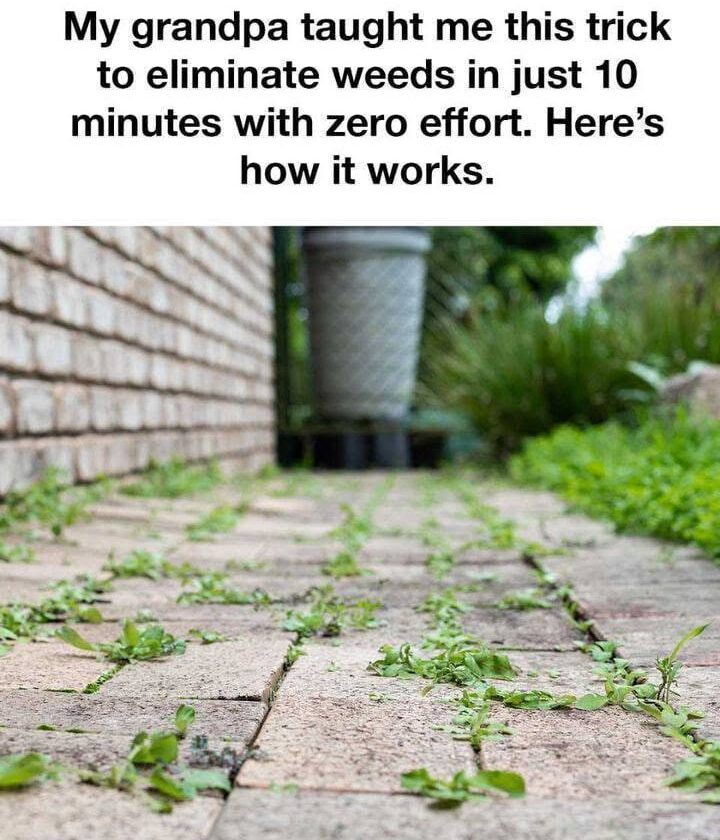
This image is a classic example of a clickbait headline. It promises an effortless solution (“eliminate weeds in just 10 minutes with zero effort”) but doesn’t actually reveal the method.
If the article turns out to recommend a homemade weed killer, here’s what to know about the most common “tricks”:
Boiling water
- Works well for weeds growing in cracks in sidewalks, driveways, and patios.
- It kills the leaves and can damage the roots of small weeds.
- It will also kill any nearby desirable plants.
Vinegar
- Household vinegar (5% acetic acid) usually burns the leaves but often doesn’t kill the roots of established perennial weeds.
- Stronger horticultural vinegar is more effective but can cause skin and eye burns and should be handled carefully.
Salt
- Salt can kill weeds, but it also stays in the soil, making it difficult for other plants to grow. It’s generally not recommended in garden beds.
Dish soap
- Soap doesn’t kill weeds by itself. It’s sometimes added to help vinegar stick to leaves.
The most effective long-term methods
- Pull weeds after rain, when the soil is soft.
- Remove as much of the root as possible.
- Fill cracks between pavers with polymeric sand to discourage regrowth.
- Apply mulch in garden beds to block sunlight and reduce new weeds.
So if an article claims a single “10-minute trick” permanently eliminates weeds with almost no effort, that’s unlikely. Most methods kill the visible growth quickly, but many weeds regrow unless the roots are removed or repeatedly treated.
If you have a patio like the one in the photo, I can also recommend the quickest and safest method based on whether you want to avoid chemical herbicides.