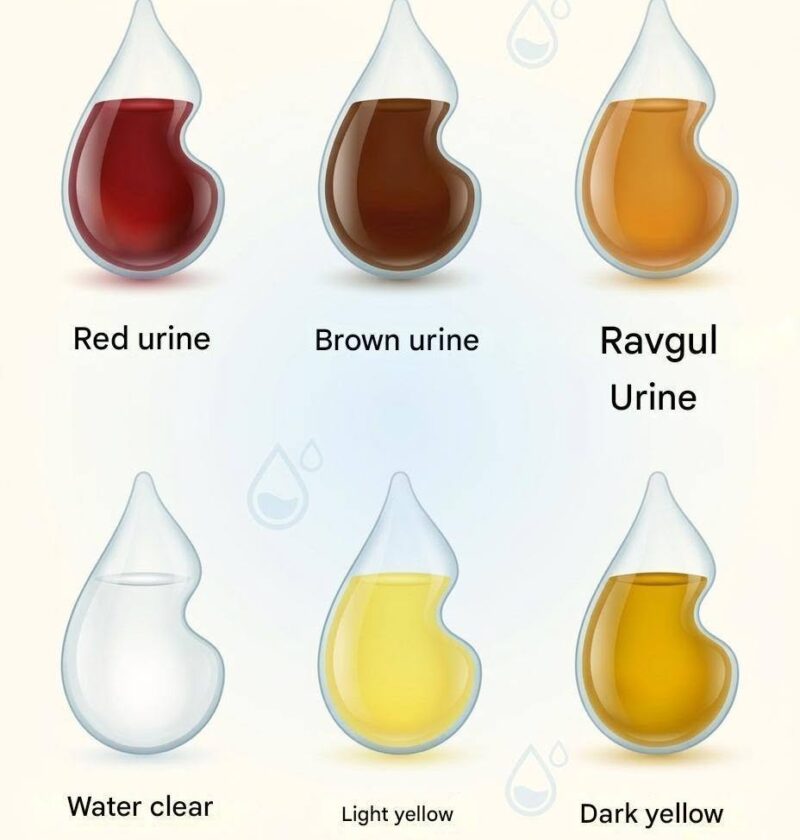
The color of your urine can give useful clues about hydration and sometimes health issues, but it’s not a diagnosis on its own. It mainly reflects how concentrated your urine is and what your body is processing.
Here’s a simple guide:
💧 1) Clear or very pale yellow
Usually normal, especially if you drink a lot of water.
What it means:
- Well hydrated
- Possibly slightly overhydrated if always completely clear
🍋 2) Light straw / pale yellow (ideal)
This is considered the healthy “normal” range.
What it means:
- Good hydration
- Normal kidney function in most cases
🟡 3) Dark yellow / amber
Common and usually means mild dehydration.
What it means:
- Not enough fluids
- Morning urine is often darker (normal overnight concentration)
🟠 4) Orange
Can be harmless or a warning depending on context.
Possible causes:
- Dehydration
- Certain vitamins (especially B-complex)
- Some medications
- Rarely, liver or bile issues
If persistent → worth checking.
🔴 5) Pink or red
This is the one to take seriously.
Possible causes:
- Blood in urine (infection, stones, etc.)
- Beets or certain foods (harmless in some cases)
- Some medications
If not food-related → see a doctor.
🟤 6) Brown / cola-colored
More concerning if not due to diet.
Possible causes:
- Severe dehydration
- Liver problems
- Muscle breakdown (rare but serious)
🟢 7) Blue or green (rare)
Unusual but usually not dangerous.
Possible causes:
- Certain medications or dyes
- Rare infections
⚠️ When to worry
You should get medical advice if you notice:
- Blood (red/pink) not linked to food
- Persistent dark brown urine
- Pain, burning, fever, or strong odor
- Sudden change that doesn’t improve with hydration
🧠 Bottom line
- Most urine color changes are about hydration
- Light yellow = best general target
- Unusual colors that persist should be checked
If you want, I can also give you a “hydration checklist” used by doctors and athletes so you don’t need to guess from urine alone.