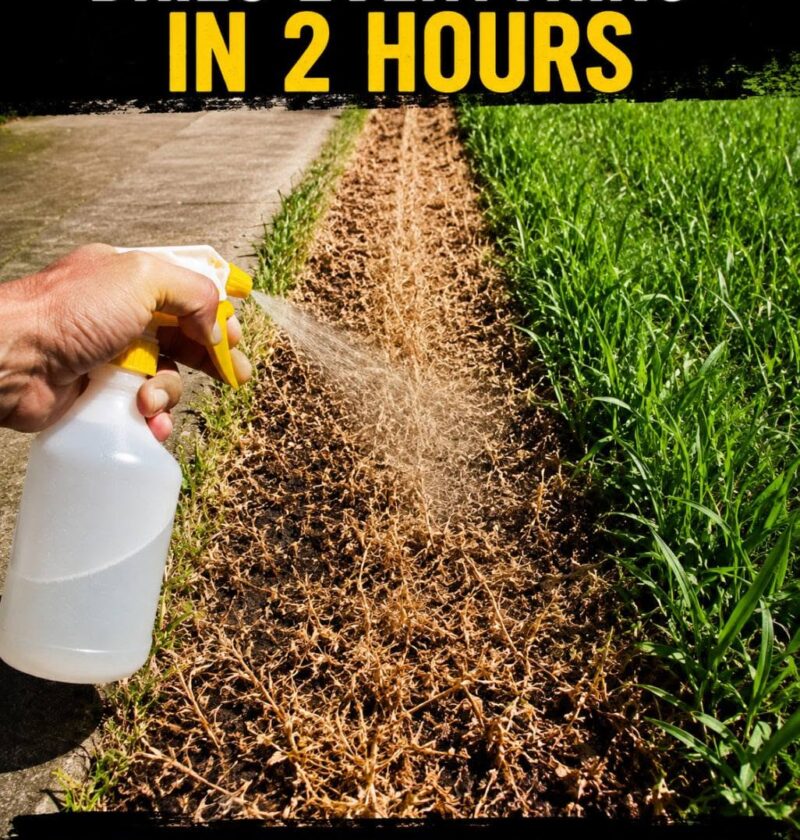
That “dries everything in 2 hours” claim is strongly exaggerated. Homemade weed sprays can damage plants quickly, but they don’t reliably kill roots in a couple of hours—and they definitely aren’t selective (they’ll harm any plant they touch).
Here’s what actually works and what to expect.
🌿 The most common “no-poison” homemade weed killer
🧪 Vinegar-based spray
Often made with:
- White vinegar (acetic acid)
- Salt (optional)
- A few drops of dish soap
What it does:
- Burns and dehydrates leaves
- Visible wilting can happen within hours in hot sun
Limitations:
- Usually only kills top growth
- Many weeds regrow from roots
- Can damage soil if overused (especially salt)
🔥 Why it “works fast” (but not permanently)
It’s a contact burn, not a true systemic kill:
- Leaves dry out quickly in heat
- Roots often survive underground
- Perennial weeds (like deep-rooted ones) usually come back
⚠️ Important warnings
- It is not selective → kills flowers, grass, vegetables if sprayed
- Salt-heavy mixes can make soil less usable over time
- Overuse can reduce long-term garden health
🌱 Better natural weed control (more effective long-term)
If you want real control without chemicals:
1) Mulching 🌾
- Wood chips, straw, dry leaves
- Blocks sunlight so weeds can’t sprout
2) Boiling water 🔥
- Works well for cracks, driveways, paths
- Kills plant cells instantly
3) Manual removal 🧤
- Pulling weeds with roots is still the most reliable method
4) Cardboard smothering 📦
- Blocks light completely
- Great for garden beds before planting
🧠 Bottom line
Homemade sprays may burn weeds quickly, but they are:
- Not permanent
- Not root-killing in most cases
- Risky for surrounding plants and soil if overused
If you want, I can give you a safe “driveway weed control system” that actually lasts weeks to months without chemicals—that’s where natural methods work best.