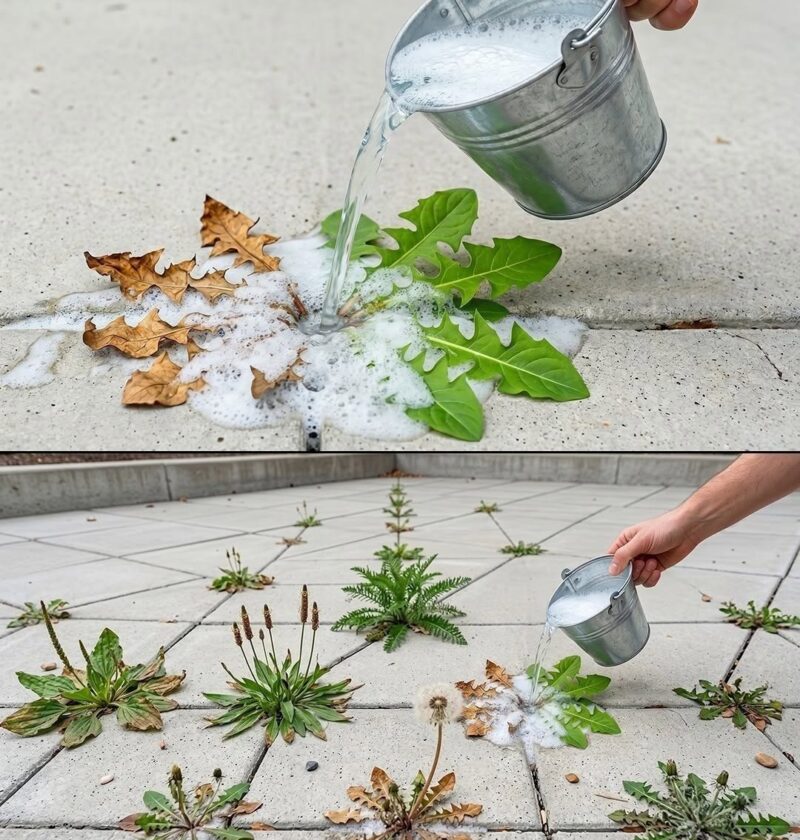
A natural homemade weed control solution can work well for paths, driveways, and cracks—but it’s important to know it’s usually non-selective, meaning it can also harm nearby plants.
Here are the most effective DIY options:
1) Vinegar spray (most popular)
White vinegar contains acetic acid, which draws moisture out of weeds and dries them up.
How to use:
- Use household white vinegar (higher acidity works faster)
- Spray directly on leaves on a hot, sunny day
- Repeat after a few days if needed
Best for: young weeds in cracks and walkways
Caution: will also damage garden plants it touches
2) Salt solution (use carefully)
Salt dehydrates plants and prevents regrowth.
Mix:
- 1 cup salt
- 2 cups hot water
- Optional: a drop of dish soap (helps it stick)
Best for: driveways, gravel areas
Warning: Salt can ruin soil long-term, so avoid garden beds
3) Boiling water (simple and effective)
Pouring boiling water directly on weeds destroys plant cells instantly.
Best for:
- Sidewalk cracks
- Small patches of weeds
No chemicals, no residue—but it can also affect nearby roots.
4) Soap + vinegar combo (stronger spray)
- 1 liter vinegar
- 1–2 teaspoons dish soap
- Spray directly on leaves
Soap helps the vinegar stick and penetrate better.
5) Prevent regrowth (most important step)
Even the best spray won’t last unless you prevent new weeds:
- Mulch garden beds heavily
- Pull weeds early before they seed
- Block sunlight with cardboard or landscape fabric
- Keep soil covered whenever possible
Bottom line
Natural weed killers work best for spot treatment and maintenance, not large infestations. The real long-term control is prevention + removing weeds early.
If you want, I can give you a safe version that won’t damage your garden plants or a plan for a specific area (lawn, driveway, or flower beds).