The color of your urine can give useful clues about hydration and sometimes overall health. It’s not a diagnosis on its own, but it can be an early warning sign.
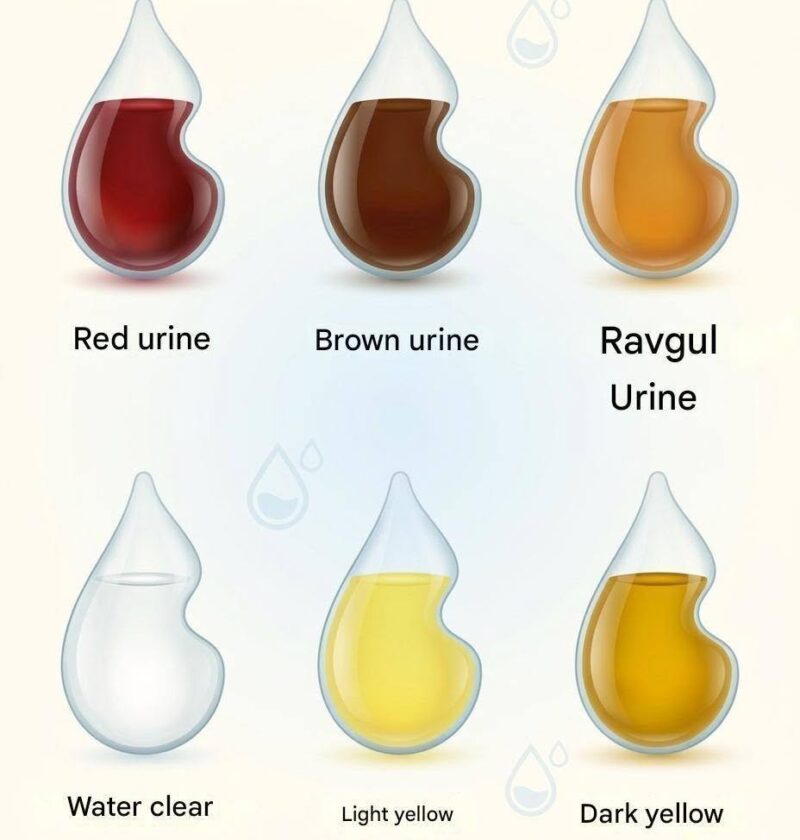
🟡 1) Pale yellow (straw color)
- ✅ Normal and healthy
- You are well hydrated
- This is the ideal color
💛 2) Dark yellow / amber
- ⚠️ Mild dehydration
- You may need more water
- Can also happen after sweating or fasting
🟠 3) Orange
Possible causes:
- Dehydration
- Certain vitamins (especially B-complex)
- Some medications
- In rare cases, liver or bile issues
👉 If it persists, it should be checked.
🔴 4) Pink or red
Possible causes:
- Beets, berries, food coloring (harmless)
- Blood in urine (hematuria) — needs medical attention
- Kidney stones or urinary infection
⚠️ If not food-related, don’t ignore it.
🟤 5) Dark brown / cola-colored
Possible causes:
- Severe dehydration
- Liver problems
- Muscle breakdown (rare but serious)
⚠️ Especially if combined with fatigue or yellowing eyes.
🟢 6) Blue or green (rare)
Possible causes:
- Certain medications or dyes
- Rare bacterial infections
- Food coloring
Usually not dangerous, but unusual.
⚪ 7) Cloudy urine
Possible causes:
- Urinary tract infection (UTI)
- Dehydration
- Kidney issues in some cases
If it comes with burning or pain → likely infection.
🧠 Key takeaway
- Light yellow = healthy
- Dark = drink more water
- Red/brown = check with a doctor if not diet-related
- Persistent changes matter more than one-time changes
⚠️ When to seek medical advice
- Blood in urine (red/pink without food cause)
- Pain or burning while urinating
- Fever with cloudy urine
- Dark brown urine that doesn’t improve with hydration
If you want, I can also explain what urine smell, frequency, and foaminess can indicate, which often gives even more clues about health.