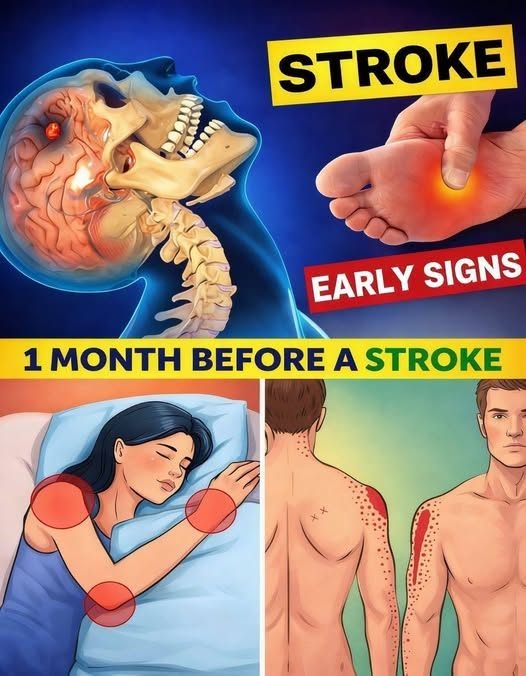
“8 warning signs of stroke that may appear one month before…”
The important truth
A true stroke often happens suddenly, without a long warning period. However, some people may experience a transient ischemic attack (TIA)—often called a “mini-stroke”—days or weeks before a major stroke.
So the realistic idea behind the headline is:
“Some early warning symptoms can occur before a stroke, especially if caused by temporary reduced blood flow to the brain.”
Possible warning signs (not always 1 month before)
These symptoms can occur with a TIA or early vascular problems:
- Sudden weakness or numbness in face, arm, or leg (especially one side)
- Trouble speaking or understanding speech
- Sudden vision problems (one or both eyes)
- Dizziness or loss of balance
- Severe unexplained headache
- Confusion or difficulty thinking clearly
But important:
- These are not guaranteed “one-month warning signs”
- They can happen minutes, hours, or days before—or not at all
The “9 tips to prevent stroke” usually include real advice
These are generally evidence-based:
- Control blood pressure (most important factor)
- Manage diabetes
- Lower cholesterol
- Stop smoking
- Exercise regularly
- Maintain healthy weight
- Limit salt and processed foods
- Treat heart conditions (like atrial fibrillation)
- Limit alcohol
Why the headline is misleading
- It turns risk factors and possible TIA symptoms into a fixed “8 signs”
- It implies a predictable timeline (“one month before”), which is not medically reliable
- It mixes warning symptoms with prevention tips to sound more dramatic
Bottom line
A more accurate version would be:
“Some people may experience warning symptoms, such as TIA, before a stroke. Managing risk factors can significantly reduce stroke risk.”
Important note
If someone suddenly develops stroke symptoms (FAST signs):
- Face drooping
- Arm weakness
- Speech difficulty
- Time to call emergency services immediately
That is a medical emergency, not something to wait and monitor.
If you want, I can break down how to tell the difference between a TIA, stroke, and common mimics (like migraines or nerve issues).