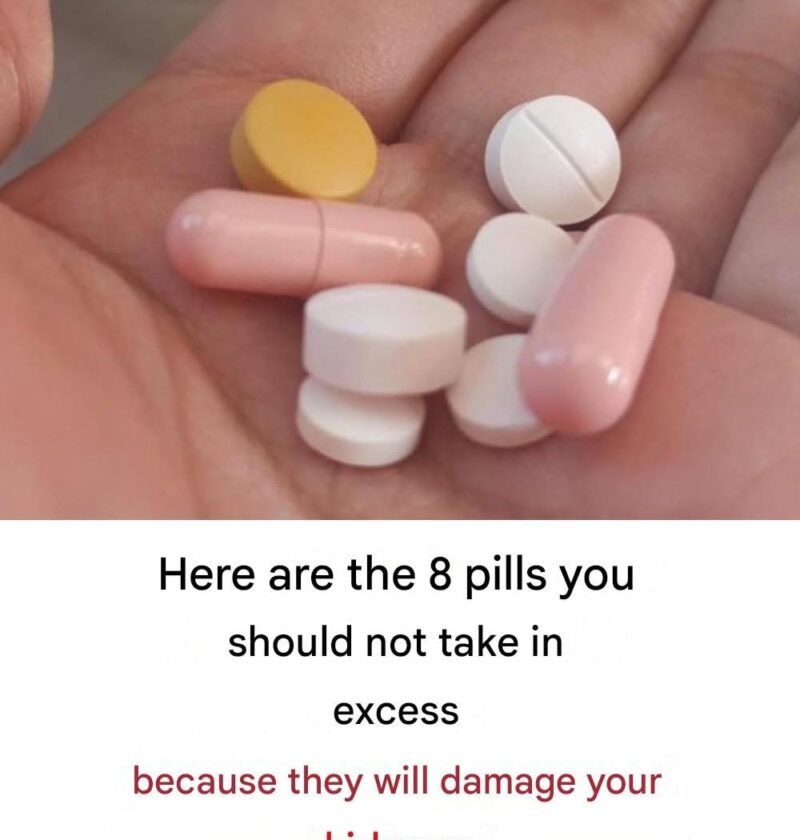
Some medications can damage the kidneys, especially if taken in high doses, for long periods, or by people who already have kidney disease, dehydration, or other risk factors. That doesn’t mean everyone should avoid them—many are safe when used as directed and under medical supervision.
Here are eight categories commonly associated with kidney injury:
- Ibuprofen – A nonsteroidal anti-inflammatory drug (NSAID). Frequent or high-dose use can reduce blood flow to the kidneys.
- Naproxen – Another NSAID with similar kidney risks, particularly in older adults or people with dehydration.
- Diclofenac – An NSAID that can contribute to kidney injury, especially with prolonged use.
- Celecoxib – A prescription NSAID that may also affect kidney function in susceptible people.
- Gentamicin – An antibiotic that can be toxic to the kidneys, which is why kidney function is often monitored during treatment.
- Vancomycin – Another antibiotic that may increase the risk of kidney injury, particularly at high blood levels or when combined with other kidney-affecting drugs.
- Lithium – A medication used for certain mental health conditions that can affect kidney function with long-term use, requiring regular monitoring.
- Omeprazole (and other proton pump inhibitors) – Rarely, these medications can cause inflammation of the kidneys, especially with prolonged use.
Some imaging procedures also use contrast dyes that can affect kidney function in people at high risk, though these are not pills.
If you have kidney disease or reduced kidney function:
- Avoid taking NSAIDs regularly unless your healthcare provider advises otherwise.
- Stay well hydrated when appropriate.
- Tell your healthcare provider about all prescription drugs, over-the-counter medicines, and supplements you take.
- Have kidney function monitored if you’re taking medications known to affect the kidneys.
If you’re concerned about a specific medication you’re taking, tell me its name and your age (and whether you have kidney disease), and I can explain its kidney-related risks in more detail.