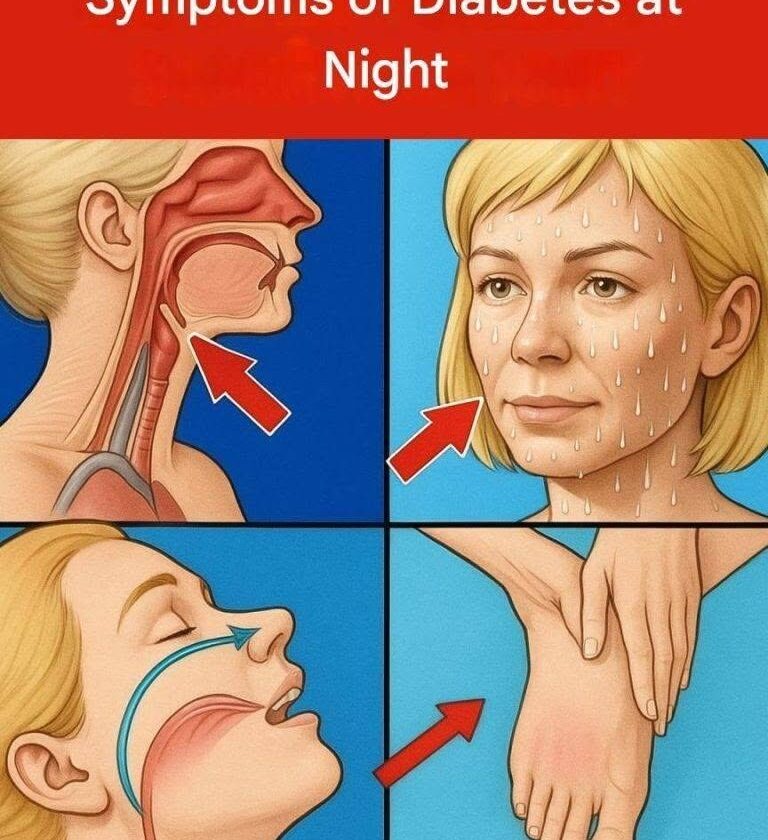
Diabetes-related symptoms can sometimes become more noticeable at night, especially when blood sugar levels are high or fluctuate. These signs are not proof of diabetes by themselves, but they can be reasons to consider a blood sugar check.
5 possible nighttime symptoms linked with diabetes
- Waking up frequently to urinate
- High blood glucose can cause the kidneys to remove extra sugar through urine, increasing nighttime trips to the bathroom.
- Strong thirst or dry mouth
- Extra urination can lead to dehydration, making you feel thirsty even during the night.
- Tingling, burning, or numbness in the feet
- Nerve irritation from diabetes-related nerve damage may feel worse at night when you are resting.
- Night sweats or shakiness
- Blood sugar that drops too low (especially in people taking insulin or certain diabetes medicines) can cause sweating, trembling, or waking suddenly.
- Poor sleep or waking up feeling tired
- Frequent urination, thirst, blood sugar changes, or discomfort from nerve symptoms can disrupt sleep.
If you notice several of these symptoms—especially increased thirst, frequent urination, unexplained weight loss, or persistent fatigue—consider discussing diabetes testing with a healthcare professional. A simple HbA1c or fasting blood glucose test can help assess your risk.