That’s another fear-style headline, but the medical reality is more nuanced.
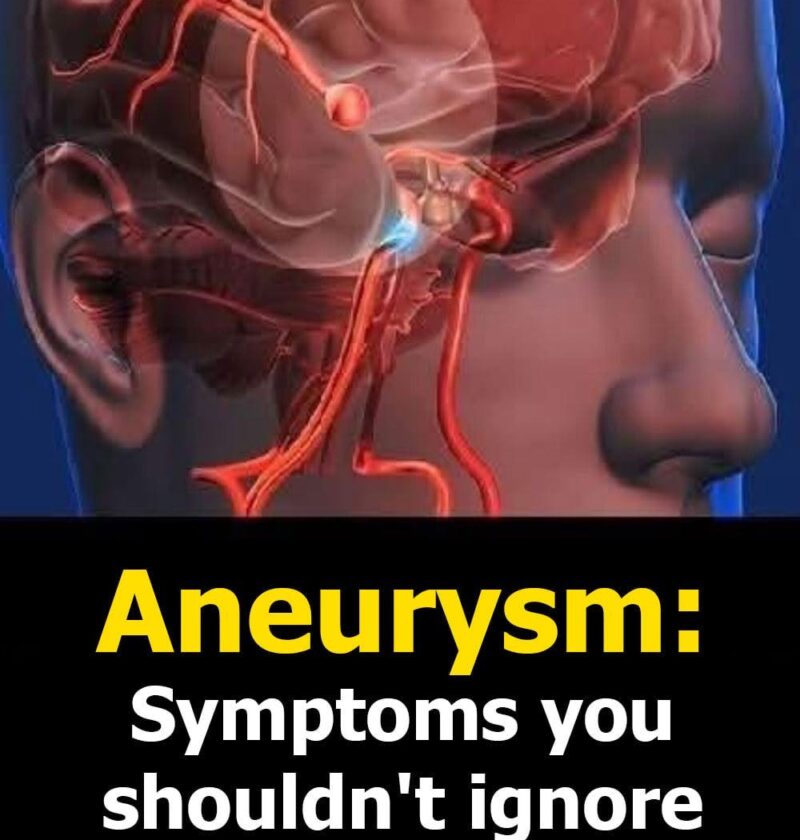
An Aneurysm is a bulge or weakening in a blood vessel wall. Many aneurysms cause no symptoms at all until they become large or rupture—which is why screening and risk awareness matter.
Possible warning signs (depending on location)
Brain aneurysm (before rupture)
Often silent, but sometimes:
- Persistent or severe headache
- Pain above or behind the eye
- Vision changes (blurred or double vision)
- Numbness or weakness in the face
- Difficulty speaking
If a brain aneurysm ruptures (medical emergency)
- “Worst headache of life” (sudden, intense)
- Neck stiffness
- Nausea/vomiting
- Loss of consciousness
- Seizure
Aortic aneurysm (in chest or abdomen)
May include:
- Deep, constant chest or back pain
- Pulsating feeling in the abdomen
- Shortness of breath (if in chest area)
If it ruptures:
- Sudden severe pain (chest, back, or abdomen)
- Dizziness, fainting
- Rapid drop in blood pressure (shock)
Important context
- Most aneurysms are asymptomatic until serious
- Many are found incidentally on scans
- Risk increases with smoking, high blood pressure, and age
When to act urgently
Seek emergency care immediately if there is:
- Sudden, severe headache unlike any before
- Sudden chest or abdominal pain with collapse or weakness