That claim is exaggerated.
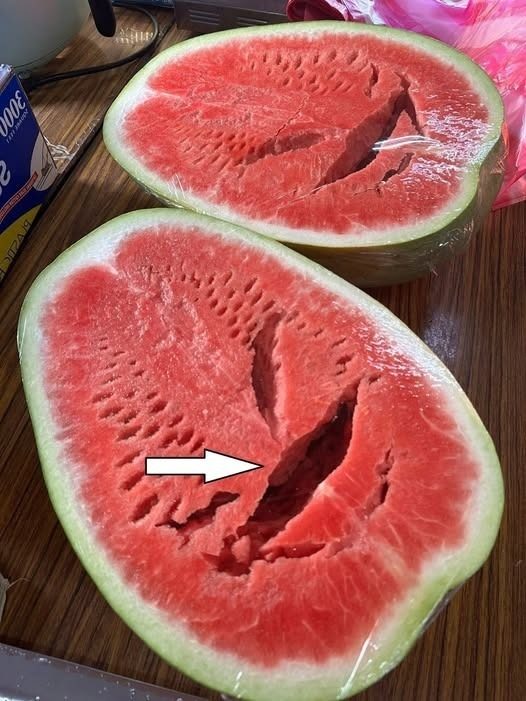
Seeing cracks or fissures inside a watermelon is not automatically a reason to throw it away or assume it’s unsafe. It depends on what those “cracks” actually look like.
What “cracks” in a watermelon usually mean
Inside watermelon flesh, crack-like lines can happen for a few normal reasons:
- Growth stress (most common): If the melon grew fast and then had uneven watering or temperature changes, the flesh can split slightly while developing.
- Overripening: As the fruit gets very ripe, the internal structure softens and can develop separations or hollow-looking streaks.
- Variety differences: Some types naturally have a more fibrous or “netted” internal texture.
- Sugar accumulation: High sugar content can sometimes cause internal “checking” or fine splits in the flesh.
When it is a problem
You should not eat it if you notice any of these along with cracks:
- Sour, alcoholic, or fermented smell
- Slimy or mushy texture
- Visible mold (white, green, or black spots)
- Bubbling or fizzing juice
- Strong off-taste
Those signs point to spoilage or fermentation, not just harmless cracking.
Bottom line
Cracks alone ≠ danger. In most cases, it’s just a growth or ripening defect, and the watermelon is still safe if it smells and tastes normal.
If you want, describe what yours looked like (color, smell, texture), and I can tell you more precisely whether it was safe.