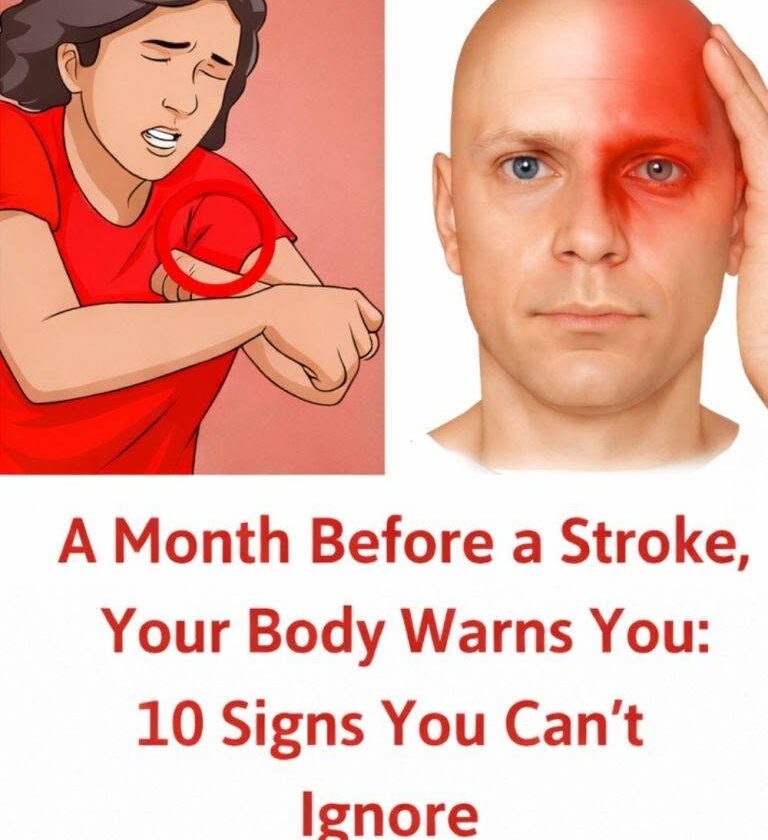
The claim that “your body warns you a month before a stroke” is misleading. While some people experience warning signs before a stroke, many strokes occur without any warning, and there is no reliable set of symptoms that consistently appears a month in advance.
The most important warning event is a Transient ischemic attack (TIA), often called a “mini-stroke.” A TIA causes stroke-like symptoms that resolve within minutes or hours, but it is a medical emergency because it signals a much higher risk of a full stroke.
Warning signs that should never be ignored
- Sudden weakness or numbness of the face, arm, or leg, especially on one side
- Sudden difficulty speaking or understanding speech
- Sudden vision loss or blurred vision in one or both eyes
- Sudden dizziness, loss of balance, or difficulty walking
- Sudden severe headache with no known cause, especially if it’s the worst headache you’ve ever had
Remember FAST
- Face: Ask the person to smile. Does one side droop?
- Arms: Ask them to raise both arms. Does one drift downward?
- Speech: Is speech slurred or strange?
- Time: Call emergency services immediately.
Risk factors you can address
The biggest risk factors for stroke include:
- High blood pressure
- Type 2 Diabetes
- High cholesterol
- Smoking
- Atrial fibrillation
- Obesity
- Physical inactivity
If you or someone else develops any sudden stroke symptoms, don’t wait to see if they improve. Rapid treatment can greatly improve the chances of recovery.