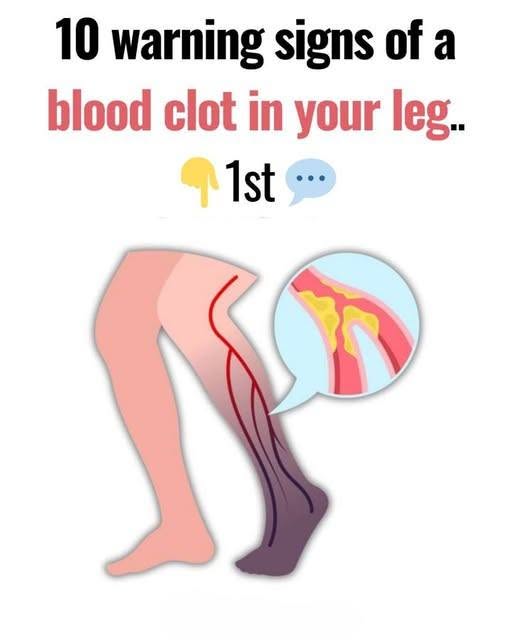
A blood clot in a deep vein of the leg is called deep vein thrombosis (DVT). It can be serious because a clot can sometimes travel to the lungs and cause a pulmonary embolism. Knowing the warning signs can help you seek care early.
10 possible warning signs of a blood clot in the leg
- Swelling in one leg
- Especially swelling that appears suddenly and affects one side.
- Pain or tenderness in the calf or thigh
- It may feel like a cramp, soreness, or aching that does not go away.
- Warmth in the affected area
- The skin over the clot may feel warmer than the other leg.
- Redness or discoloration
- The skin may look red, purple, or darker than usual.
- A feeling of heaviness or tightness
- The leg may feel full, tense, or uncomfortable.
- Pain that worsens when walking or standing
- Movement may make discomfort more noticeable.
- Enlarged or more visible surface veins
- Nearby veins may become more noticeable due to changes in blood flow.
- Unexplained leg fatigue
- Affected muscles may feel unusually tired or weak.
- Tenderness along a vein
- A specific area may be painful when touched.
- Symptoms that appear without a clear injury
- Sudden leg symptoms without a strain, fall, or workout injury deserve attention.
Seek emergency help immediately if leg symptoms are accompanied by:
- Sudden shortness of breath
- Chest pain (especially with breathing)
- Coughing up blood
- Fainting or severe dizziness
- Rapid heartbeat
These can be signs of a clot that has moved to the lungs.
Risk factors that increase the chance of DVT include:
- Long periods of sitting or immobility (such as long travel or bed rest)
- Recent surgery or major injury
- Pregnancy or the postpartum period
- Certain hormone medications
- Smoking
- Previous blood clots
- Some inherited clotting conditions
Leg swelling or pain can have many causes besides a clot, so symptoms alone cannot confirm DVT. A healthcare professional may need tests such as an ultrasound to diagnose it.