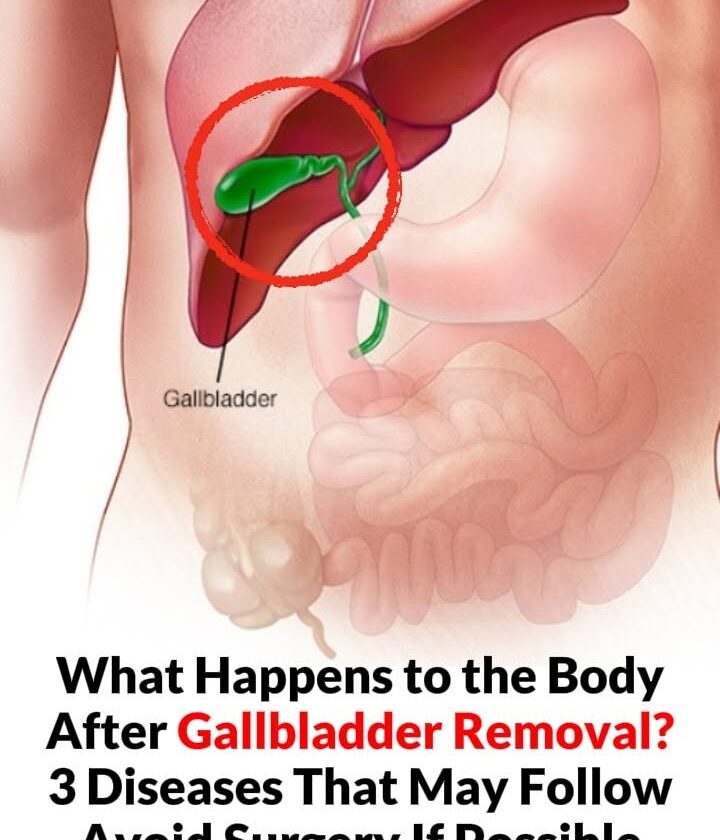
If you’re asking about the claim “What happens to the body after gallbladder removal? 3 diseases that may follow—avoid surgery if possible”, the reality is more nuanced.
Gallbladder removal (cholecystectomy) is a very common operation and is usually considered safe when medically indicated (for example, repeated painful gallstones, gallbladder inflammation, or certain complications). The body can function without a gallbladder because the liver continues producing bile; instead of being stored and released in bursts, bile flows continuously into the intestine.
Common changes after gallbladder removal
Some people notice:
- Diarrhea or looser stools, especially after fatty meals
- Bloating or gas
- Difficulty digesting very large or greasy meals
- Changes in bowel habits that often improve over weeks to months
Conditions that may be associated with gallbladder removal
Research has found possible associations (not always direct causes) with some conditions:
- Bile acid diarrhea
- Without a gallbladder, bile enters the intestine more continuously.
- In some people, excess bile reaching the colon can cause chronic diarrhea.
- This can often be treated with medications that bind bile acids.
- Changes in gut bacteria and digestive function
- Altered bile flow may influence the gut microbiome and digestion.
- The long-term health significance of these changes is still being studied.
- Small increased risks of certain digestive issues in some studies
- Some studies have reported associations between cholecystectomy and conditions such as reflux symptoms or changes in bowel function.
- These risks vary, and many people have no long-term problems.
Should you avoid gallbladder surgery if possible?
Not necessarily. Avoiding surgery can be reasonable when:
- Gallstones are found but cause no symptoms
- Symptoms are mild and can be managed safely
- A doctor confirms there is no infection, blockage, or high-risk complication
However, delaying recommended surgery can be dangerous in some cases, such as:
- Recurrent gallbladder attacks
- Gallbladder infection (cholecystitis)
- A blocked bile duct
- Gallstone-related pancreatitis
The best decision depends on why surgery is being considered, your symptoms, imaging results, and overall health.
If you mean this as a title for an article/video and want it rewritten to be more accurate or less sensational, I can help with that too.