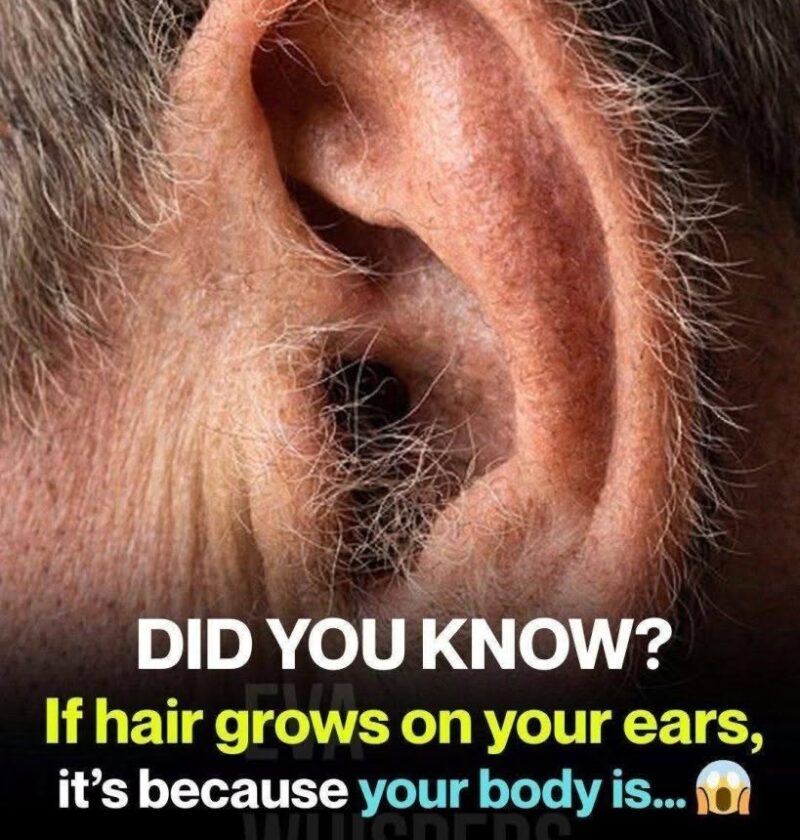
The headline “What your ear hair says about your health” is mostly clickbait with a small grain of truth. Ear hair by itself is not a reliable health indicator, but in some cases, changes in body hair patterns can loosely correlate with hormones and aging.
What ear hair usually means
1. Normal aging
- Ear hair commonly increases with age, especially in men.
- It’s mainly driven by hormonal changes (androgens) over time.
2. Genetics
- Some people naturally grow more visible ear hair regardless of health.
Claims you may see online (and the truth)
“Ear hair means heart disease risk”
- There is a limited, non-definitive association in some small studies between increased ear crease/hair and cardiovascular risk.
- But ear hair alone is NOT a diagnostic sign of heart disease.
“More ear hair = high testosterone”
- Partly true in a general sense (androgens influence body hair),
- But it does not indicate abnormal hormone levels.
When changes might matter
It’s worth discussing with a doctor only if you notice:
- Sudden, unusual hair growth changes with other symptoms
- Signs of hormonal imbalance (fatigue, weight changes, libido changes)
- Other cardiovascular risk factors (high blood pressure, diabetes, smoking)
Important reality check
- Ear hair is mostly a cosmetic and aging trait
- It is not a medical test
- Viral posts often exaggerate weak or outdated correlations
Bottom line
Ear hair is mainly related to age and genetics, not a reliable sign of disease.
If you want, I can break down other viral “body signs of disease” claims and tell you which ones are real vs fake.