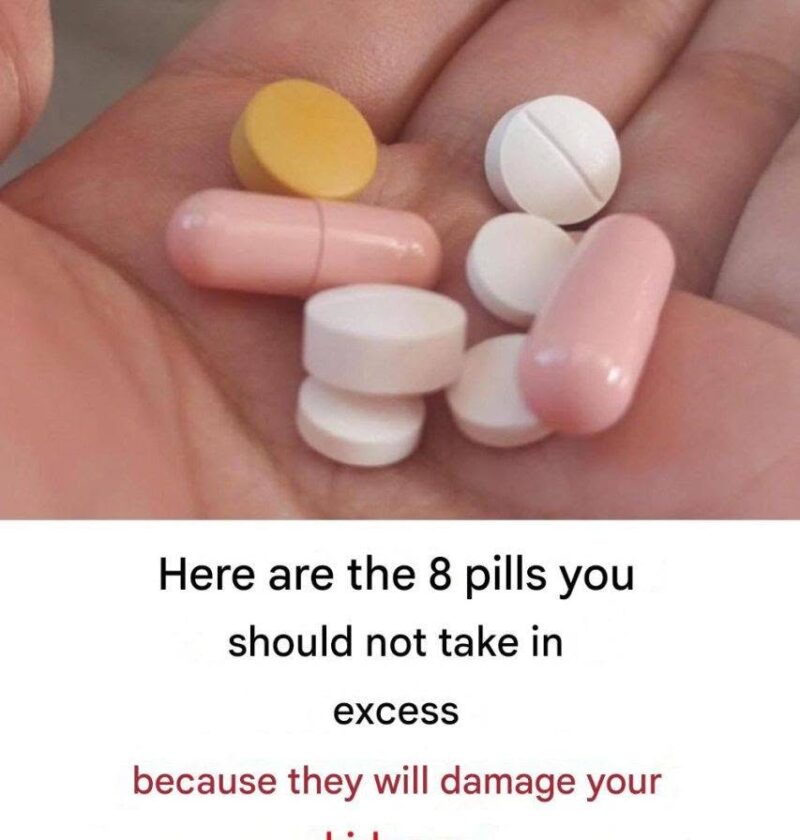
The claim “Eight pills you shouldn’t take because they damage your kidneys” is often presented as a warning, but it is too broad. Many medications can affect kidney function in certain situations, yet they may be safe and necessary when used correctly and monitored by a healthcare professional.
Examples of medicines that can potentially affect the kidneys include:
- Nonsteroidal anti-inflammatory drugs (NSAIDs)
- Examples: ibuprofen and naproxen.
- Can reduce blood flow to the kidneys, especially with long-term use, high doses, dehydration, or existing kidney disease.
- Certain antibiotics
- Some antibiotics can stress the kidneys, particularly in people with reduced kidney function or when given at high doses.
- Some blood pressure medications
- Certain medicines can change kidney blood flow or potassium levels and may require monitoring with blood tests.
- Diuretics (“water pills”)
- These can affect fluid balance and electrolytes, especially if dehydration occurs.
- Certain acid-reducing medications
- Some proton pump inhibitors (PPIs) have been associated with kidney problems in some studies, though the overall risk varies.
- Some antiviral medications
- Certain antivirals can affect kidney function and require dose adjustments.
- Some chemotherapy drugs
- Certain cancer treatments can be harmful to the kidneys and are monitored closely.
- High-dose supplements or herbal products
- Some unregulated supplements can contain ingredients that may harm the kidneys.
Protecting your kidneys
- Avoid taking more than the recommended dose of pain relievers.
- Stay hydrated, especially during illness or heat exposure.
- Tell your healthcare professional about all medications and supplements you use.
- Have kidney function checked if you take medicines that require monitoring.
Bottom line: It is not accurate to say you should “never” take these medications. The real concern is unnecessary use, incorrect dosing, drug interactions, and taking certain medicines without proper monitoring—especially if you already have kidney problems.