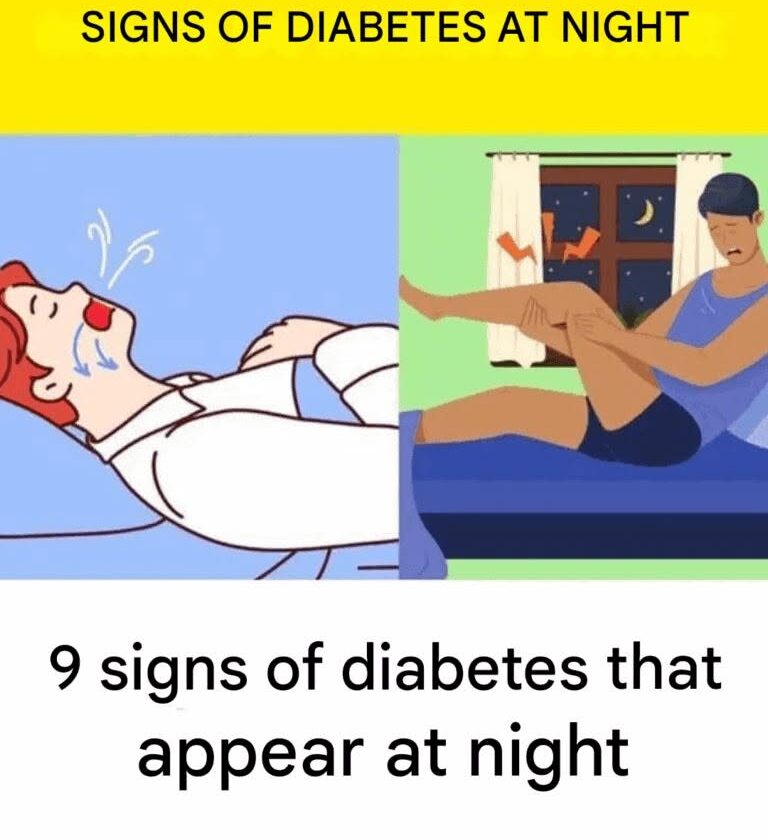
9 Signs of Diabetes That May Appear at Night
Diabetes can affect the body around the clock, and some warning signs may become more noticeable during the night. These symptoms are often linked to changes in blood sugar levels, increased urination, nerve effects, or changes in the body’s fluid balance.
1. Frequent Nighttime Urination
High blood sugar can cause the kidneys to remove extra glucose through urine, leading to more trips to the bathroom during the night.
2. Excessive Thirst at Night
Loss of fluids from frequent urination can trigger increased thirst, including waking up needing water.
3. Night Sweats
Some people experience sweating during sleep, which may occur when blood sugar drops too low, especially in those taking certain diabetes medications.
4. Tingling or Numbness in Feet
Diabetes-related nerve changes can cause burning, tingling, or numb sensations that may become more noticeable when resting at night.
5. Leg Cramps or Restless Legs
Changes in circulation, nerve function, or blood sugar control may contribute to nighttime leg discomfort in some people.
6. Trouble Sleeping
Blood sugar fluctuations, frequent bathroom trips, thirst, or discomfort from nerve symptoms can interrupt sleep.
7. Increased Hunger After Waking
Low blood sugar episodes during the night may leave some people feeling unusually hungry when they wake up.
8. Slow-Healing Cuts or Skin Problems
While not only a nighttime symptom, people may notice wounds, itching, or skin changes that persist over time.
9. Blurred Vision or Morning Vision Changes
Blood sugar fluctuations can affect the eye’s lens and may cause temporary changes in vision.
When to Consider a Checkup
If you notice several of these symptoms—especially frequent urination, unusual thirst, unexplained weight changes, fatigue, or numbness—consider discussing diabetes testing with a healthcare professional.
Common tests include:
- Fasting blood glucose
- HbA1c (average blood sugar test)
- Oral glucose tolerance test
These symptoms can have other causes as well, so proper evaluation is important rather than relying on symptoms alone.