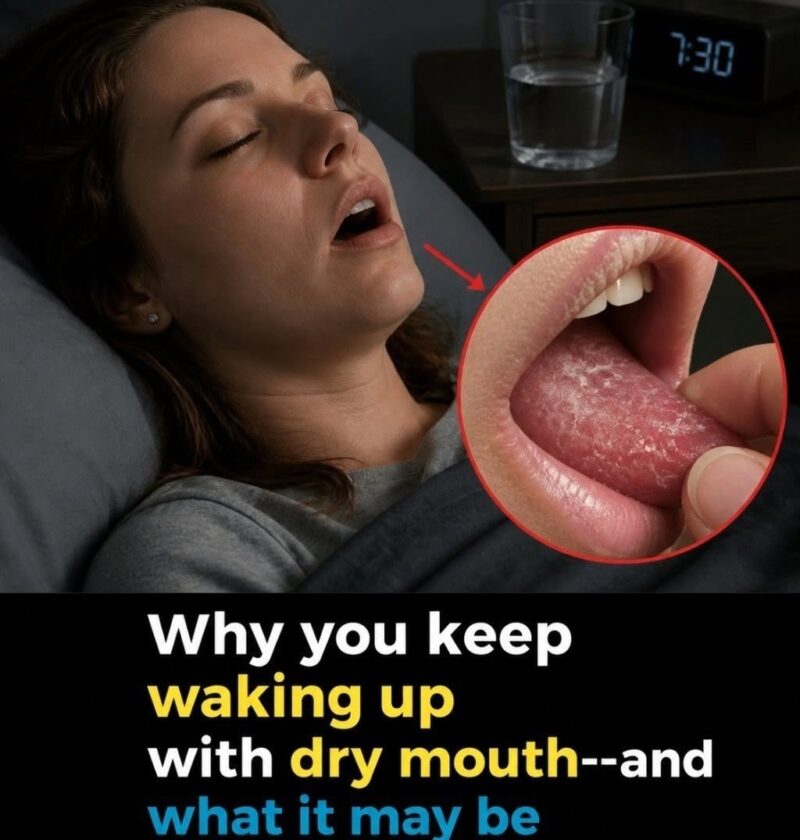
Waking up with a dry mouth is common, but it can be your body’s way of signaling something is affecting saliva production, breathing, or hydration.
Possible reasons include:
- Sleeping with your mouth open
- Often caused by nasal congestion, allergies, or a habit of mouth breathing.
- Snoring or sleep apnea
- Breathing interruptions during sleep can lead to mouth breathing and dryness. Other signs may include loud snoring, morning headaches, or daytime sleepiness.
- Dehydration
- Not drinking enough fluids, sweating, alcohol intake, or some illnesses can reduce moisture levels.
- Medications
- Many medicines can cause dry mouth, including some allergy medicines, antidepressants, blood pressure medicines, and others.
- A dry bedroom environment
- Low humidity or heating/air conditioning can contribute.
- High blood sugar
- Persistent dry mouth along with increased thirst, frequent urination, fatigue, or unexplained weight loss can be a reason to check blood sugar.
- Dental or oral issues
- Reduced saliva can increase the risk of cavities, gum problems, and bad breath.
Things that may help
- Drink enough water during the day.
- Avoid alcohol and tobacco, especially close to bedtime.
- Use a humidifier if your room air is very dry.
- Treat nasal congestion if it is contributing to mouth breathing.
- Maintain regular dental checkups.
Consider speaking with a healthcare professional if dry mouth is persistent, severe, started after a new medication, or comes with trouble swallowing, mouth sores, frequent infections, or symptoms of high blood sugar.