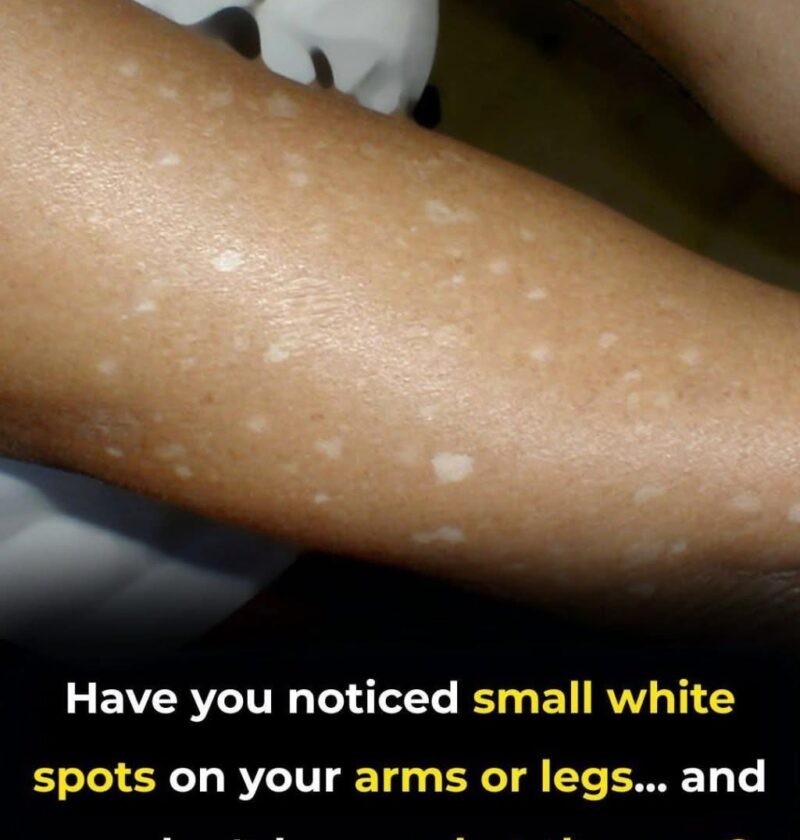
Small white spots on the arms or legs are fairly common, but the cause can vary. A dermatologist usually looks at the size, shape, texture, location, and whether the spots are changing before making a diagnosis.
Common possibilities include:
1. Idiopathic guttate hypomelanosis
- Tiny (often 2–6 mm) flat white spots, commonly on the forearms and lower legs.
- More common with age and long-term sun exposure.
- Usually harmless and do not require treatment.
2. Tinea versicolor
- White, lighter, or slightly darker patches caused by an overgrowth of normal skin yeast.
- May have fine scaling or mild itching.
- Often appears on the chest, back, shoulders, or upper arms.
3. Vitiligo
- Areas where skin loses pigment completely.
- Spots may gradually enlarge or spread.
- A healthcare professional can confirm the diagnosis.
4. Dry skin or healed skin changes
- Dryness, minor injuries, inflammation, or scars can sometimes leave lighter patches.
When to get it checked
See a dermatologist if:
- The spots are spreading quickly.
- They are completely white and sharply defined.
- New patches appear suddenly.
- There is itching, scaling, pain, or hair turning white in the area.
- You are unsure what they are.
A specialist’s advice is usually: don’t assume every white spot is a serious condition, but don’t ignore changes in your skin either. A quick skin examination can often identify the cause.
If you describe the spots (age, where they appear, size, whether they are flat/raised, itchy, scaly, or spreading), I can help narrow down the possibilities.