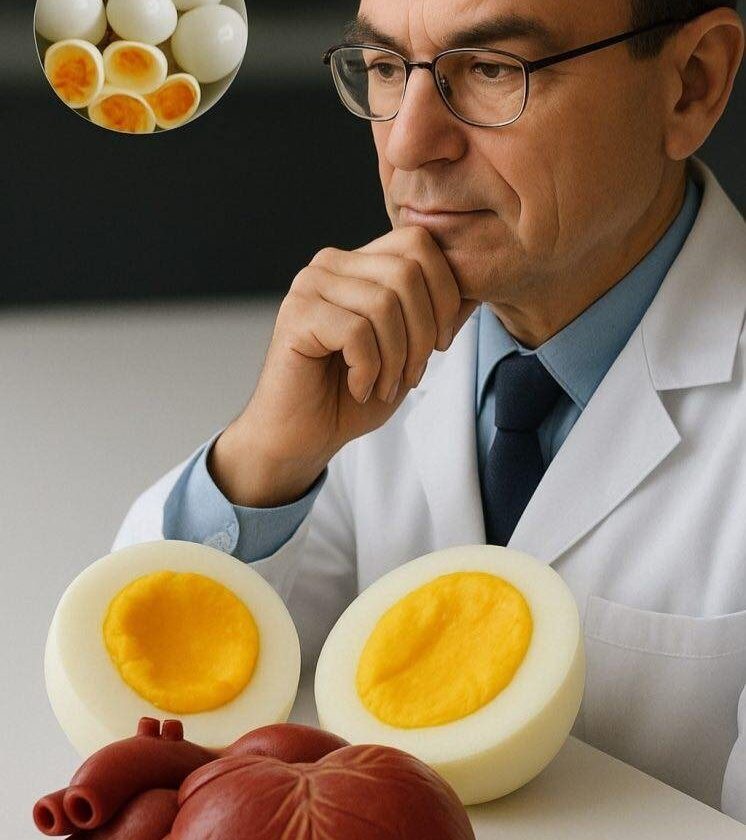
That sentence is another classic “clickbait cliffhanger.” The full claim usually implies something like “make your heart stronger” or sometimes the opposite, depending on the site—but both are often oversimplified.
Here’s what the actual science says about eating boiled eggs in the morning:
What eggs really do
- High-quality protein: Eggs help with muscle maintenance and keep you full longer.
- Nutrients: They contain vitamin D, B12, choline (important for brain function), and healthy fats.
- Satiety: Eating eggs in the morning can reduce hunger later in the day for some people.
The heart health question (the controversial part)
- Eggs do contain dietary cholesterol, which led to old concerns about heart disease.
- But modern research shows that for most healthy people, dietary cholesterol has a much smaller effect on blood cholesterol than saturated and trans fats.
- Large studies generally find that moderate egg intake (about 1 egg per day) is not linked to higher heart disease risk in healthy individuals.
When to be more careful
- If someone already has diabetes or existing heart disease, doctors may recommend moderating intake depending on the overall diet.
- The bigger risk often comes from what eggs are eaten with (butter, processed meats, fried foods), not the eggs themselves.
Bottom line
Boiled eggs in the morning don’t “transform your heart” in a dramatic way—but for most people, they are a nutritious, filling, and generally heart-safe breakfast option when eaten in moderation.
If you want, I can compare eggs with other breakfast foods so you can see what’s actually healthier in practice.