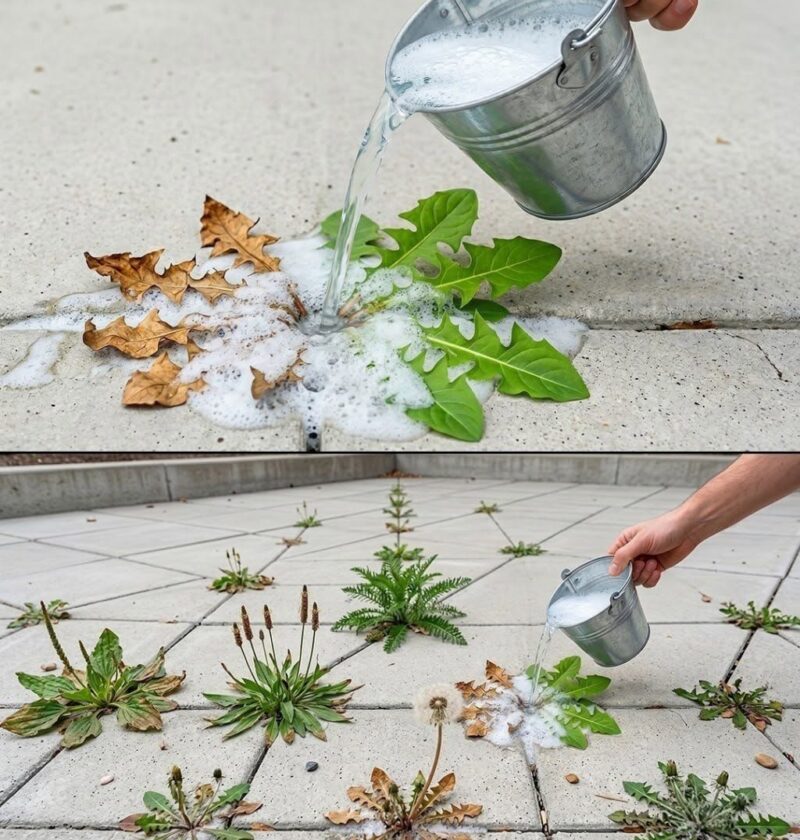
Claims like “This burns weeds in 1 day! They NEVER grow again” are almost always exaggerated.
Here’s what the evidence says:
- Vinegar: Household vinegar (about 5% acetic acid) can burn the leaves of young weeds, especially on hot, sunny days. However, it usually does not kill the roots of established perennial weeds, so they often grow back.
- Boiling water: Can quickly kill the above-ground parts of weeds in cracks in pavement or driveways. Deep-rooted weeds may regrow.
- Salt: Salt can kill plants, but it also remains in the soil and can prevent desirable plants from growing. It’s generally not recommended for garden beds because it can damage soil for a long time.
- Commercial herbicides: Some systemic herbicides move into the roots and can provide more complete control of certain perennial weeds. Even then, no herbicide guarantees weeds will “never” return, because new weed seeds can germinate later.
The most effective long-term strategy
Instead of relying on a single “miracle” treatment, combine methods:
- Pull or dig out weeds, including as much of the root as possible.
- Apply mulch 2–4 inches (5–10 cm) deep to block sunlight and reduce new weeds.
- Remove weeds before they produce seeds.
- Use targeted herbicides only when appropriate and according to the product label.
The best method depends on what kind of weed you’re dealing with and where it’s growing (lawn, vegetable garden, flower bed, gravel driveway, etc.).
If you tell me:
- the type of weed (or upload a photo), and
- where it’s growing,
I can suggest the most effective and least damaging way to get rid of it.