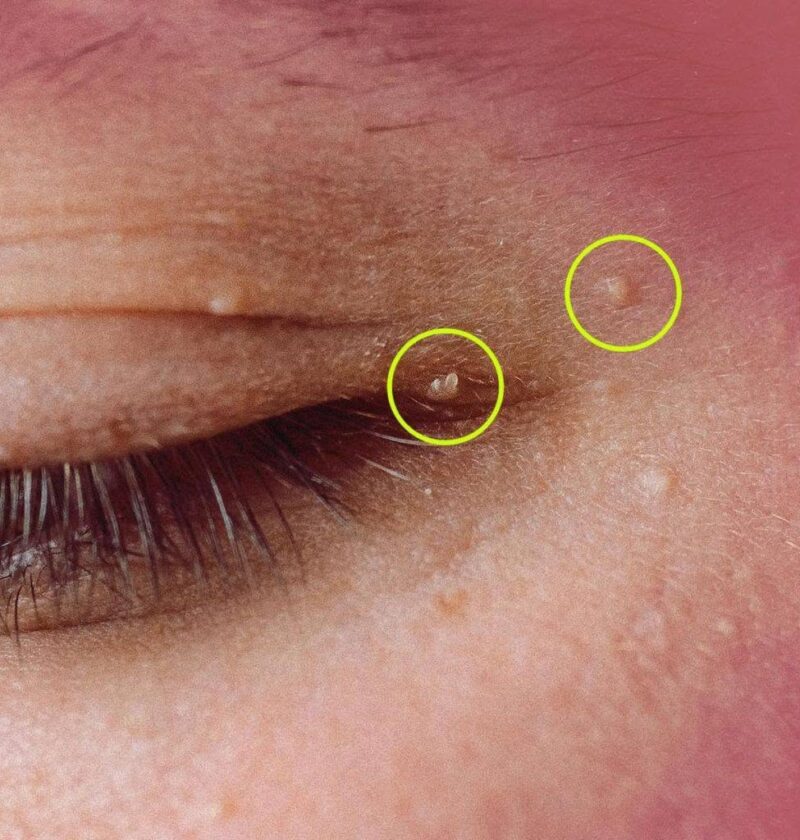
How to Get Rid of Milia: Those Tiny White “Fat Cysts” Under the Skin
Milia are small, firm, white or yellowish bumps that often appear around the eyes, cheeks, nose, or forehead. Despite the common nickname “fat cysts,” they are not caused by trapped fat. They are tiny keratin-filled cysts that form when dead skin cells become trapped beneath the skin’s surface.
What can help remove milia?
1. Don’t squeeze or pop them
Milia are not like pimples. Trying to squeeze them can:
- Damage the skin
- Cause irritation or infection
- Leave marks or scarring
2. Use gentle exfoliation
Products that encourage skin cell turnover may help prevent new milia from forming:
- Retinoids (such as adapalene or prescription retinoids)
- Alpha hydroxy acids (AHAs) like glycolic acid
- Beta hydroxy acid (BHA) like salicylic acid
Start slowly, especially around the eye area, because irritation can make skin problems worse.
3. Choose lighter skincare products
Heavy creams and thick oils may contribute to clogged skin for some people. Look for:
- Non-comedogenic moisturizers
- Lightweight sunscreens
- Gentle cleansers
4. Professional removal
A dermatologist or trained skincare professional can remove stubborn milia using sterile techniques, such as:
- Tiny incision and extraction
- Other dermatologic procedures when appropriate
This is usually the quickest way to remove existing bumps.
5. Protect your skin from sun damage
Sun exposure can contribute to changes in skin turnover. Daily sunscreen can help maintain healthier skin.
When to see a dermatologist
Consider professional advice if:
- The bumps are spreading
- They keep returning
- They are around the eyes and difficult to treat
- You are unsure whether they are actually milia
Avoid “miracle cures”
Home remedies like scraping, burning, or applying harsh acids can injure the skin and are unlikely to safely remove true milia.
If you’d like, I can also give you a simple 7-day skincare routine for milia-prone skin or explain how to tell milia apart from acne, sebaceous hyperplasia, and other bumps.