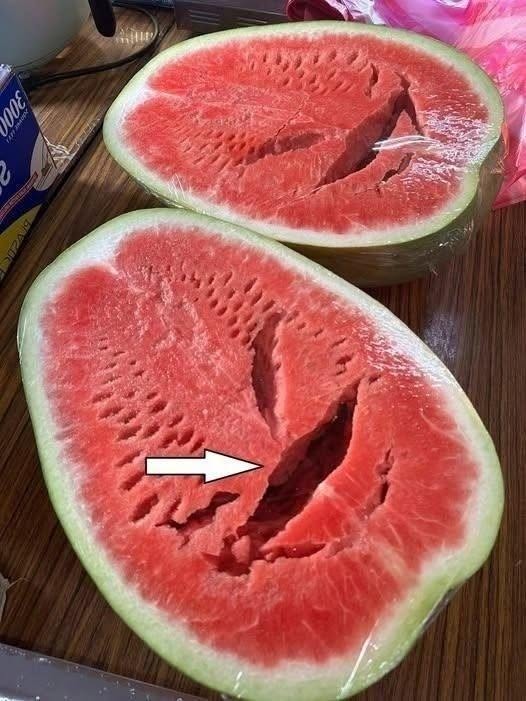
That warning is mostly misleading.
Cracks or splits inside a watermelon do not automatically mean it is unsafe to eat.
Possible reasons for internal cracks include:
- Natural growth: Rapid growth or changes in water availability while the fruit was developing can cause the flesh to crack.
- Ripening: Some ripe watermelons develop small internal separations.
- Handling: Drops or impacts during transport can sometimes cause internal cracking.
The watermelon is generally safe to eat if:
- It smells fresh and sweet.
- The flesh is firm and juicy.
- There is no mold.
- There is no slimy texture.
- There is no sour, fermented, or unpleasant odor.
You should discard the watermelon if you notice:
- Mold on the flesh.
- A sour or alcoholic smell.
- Slimy or mushy texture.
- Unusual discoloration (such as extensive dark, black, or fuzzy areas).
- Signs that it has been left unrefrigerated after cutting for more than 2 hours (or 1 hour if the temperature is above 32°C/90°F).
So, the headline “Stop eating it immediately!” is an exaggeration. Internal cracks alone are usually a quality issue, not a sign that the watermelon is dangerous to eat. The overall appearance, smell, texture, and storage conditions are much better indicators of whether it’s safe.