Possible benefits
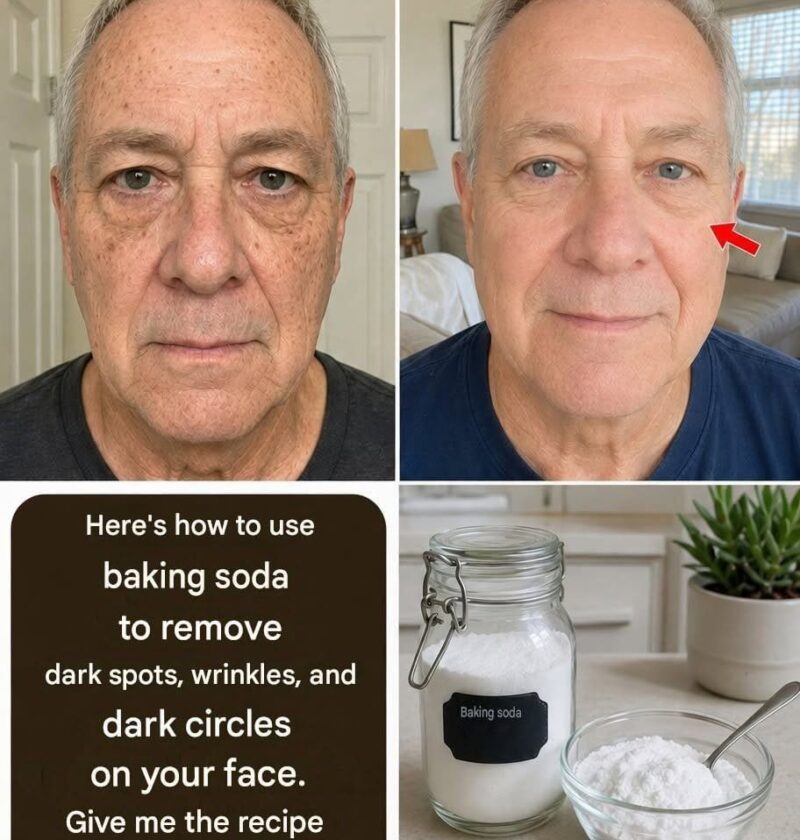
Some people report that baking soda may:
- Gently remove dead skin cells through physical exfoliation.
- Absorb excess oil temporarily.
- Help remove some surface stains or residue.
- Leave the skin feeling smoother immediately after use.
However, there is limited scientific evidence supporting these uses on facial skin.
Risks
Using baking soda on your face may:
- Irritate or burn sensitive skin.
- Dry out the skin.
- Disrupt the skin’s natural pH, which can weaken the skin barrier.
- Increase redness and inflammation.
- Worsen conditions such as eczema, rosacea, or acne in some people.
If you have sensitive skin or a skin condition, it’s best to avoid using baking soda on your face.
How to use it more safely
If you choose to try it despite the risks:
- Perform a patch test on a small area of skin and wait 24 hours.
- Use it no more than once every 1–2 weeks.
- Avoid the eyes, lips, and any cuts or irritated skin.
- Rinse thoroughly with lukewarm water.
- Apply a gentle, fragrance-free moisturizer afterward.
- Stop using it if you experience burning, significant redness, or persistent irritation.
Four gentle DIY recipes
1. Simple exfoliating paste
Ingredients
- 1 teaspoon baking soda
- 2 teaspoons water
Directions
Mix into a smooth paste, massage very gently for no more than 30 seconds, then rinse thoroughly.
2. Oatmeal and baking soda scrub
Ingredients
- 1 tablespoon finely ground oatmeal
- ½ teaspoon baking soda
- Enough water to make a paste
Directions
Apply with light circular motions, then rinse well. The oatmeal may make the mixture less abrasive than baking soda alone.
3. Honey and baking soda mask
Ingredients
- 1 tablespoon honey
- ¼ teaspoon baking soda
Directions
Apply for 5–10 minutes, then rinse. Honey can help reduce the drying feel for some people, though the baking soda still carries a risk of irritation.
4. Yogurt and baking soda mask
Ingredients
- 1 tablespoon plain yogurt
- ¼ teaspoon baking soda
Directions
Apply for 5–10 minutes, then rinse with lukewarm water.
Better alternatives
For most people, products specifically formulated for facial skincare are safer and more effective than baking soda. Depending on your goal:
- For exfoliation: Products containing lactic acid, glycolic acid, or low-strength salicylic acid.
- For oily skin: Niacinamide or clay masks.
- For acne: Salicylic acid or benzoyl peroxide (used as directed).
- For brightening: Vitamin C or azelaic acid.
These ingredients are designed to work with the skin’s natural barrier and have stronger evidence supporting their effectiveness than baking soda.