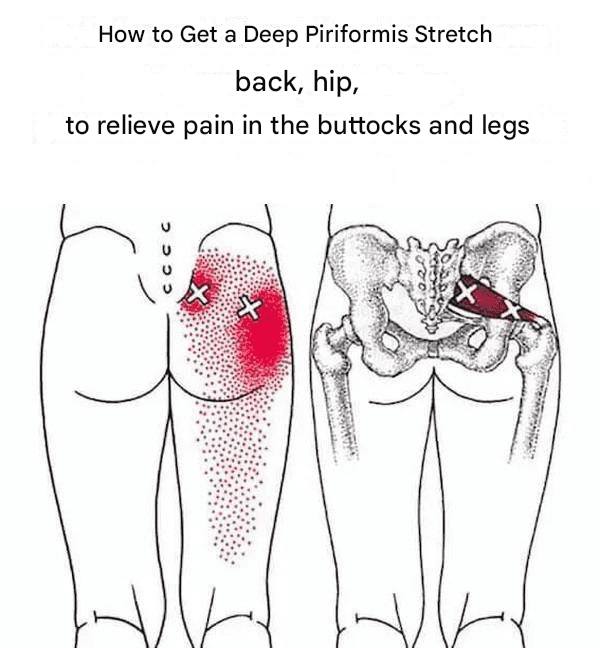
The piriformis is a small muscle deep in the glutes that can irritate the sciatic nerve when it becomes tight or inflamed. A good piriformis stretch can reduce pain that radiates through the lower back, hip, buttock, and down the leg — especially if the pain is worse after sitting.
Here are the most effective ways to stretch it safely.
1. Figure-4 Piriformis Stretch (Most Effective for Many People)
- Lie on your back with knees bent.
- Cross your right ankle over your left knee.
- Grab the back of your left thigh.
- Pull the left leg toward your chest until you feel a deep stretch in the right glute.
- Keep your lower back relaxed.
Hold for:
- 30–60 seconds
- Repeat 2–4 times per side
You should feel:
- Deep stretch in the buttock/glute
- Mild hip opening
- No sharp nerve pain
2. Seated Piriformis Stretch (Good During the Day)
- Sit upright in a chair.
- Cross one ankle over the opposite knee.
- Keep your spine straight.
- Lean forward slowly from the hips.
Stop when you feel:
- Stretch in the glute/outer hip
- Not numbness or intense sciatic pain
Hold:
- 30 seconds
- Repeat several times daily
3. Supine Twist Variation (Deeper Stretch)
- Lie on your back.
- Pull one knee toward the opposite shoulder.
- Keep the opposite leg straight.
- Gently rotate the hip inward.
This targets the deeper fibers of the piriformis and often helps when regular stretches are not enough.
4. Pigeon Pose (Advanced)
From yoga:
- Bring one shin in front of your body.
- Extend the other leg behind you.
- Lower your chest slowly toward the floor.
This can be extremely effective but may aggravate symptoms if forced. Use support cushions if your hips are tight.
Important Technique Tips
Do:
- Breathe slowly
- Stretch gently, not aggressively
- Warm up first with walking or heat
- Stretch consistently for 1–2 weeks
Avoid:
- Bouncing
- Pushing through numbness or sharp pain
- Sitting for long periods afterward
If Sciatica Symptoms Are Present
Piriformis tightness can mimic or worsen Sciatica. If stretching causes:
- Increased tingling
- Burning pain down the leg
- Foot weakness
- Loss of bladder/bowel control
stop and get medical evaluation promptly.
Strengthening Matters Too
Often the piriformis becomes overworked because nearby muscles are weak. These exercises help long-term:
- Glute bridges
- Clamshells
- Side-lying leg raises
- Hip mobility work
- Core stabilization
Simple Daily Routine (10 Minutes)
- Walk for 2 minutes
- Figure-4 stretch — 1 minute each side
- Knee-to-opposite-shoulder stretch — 1 minute each side
- Glute bridges — 15 reps
- Clamshells — 15 reps each side
If you want, I can also show:
- a visual diagram of the stretches,
- the single deepest piriformis stretch used by physical therapists,
- or how to tell whether the pain is actually piriformis syndrome vs a lumbar disc problem.