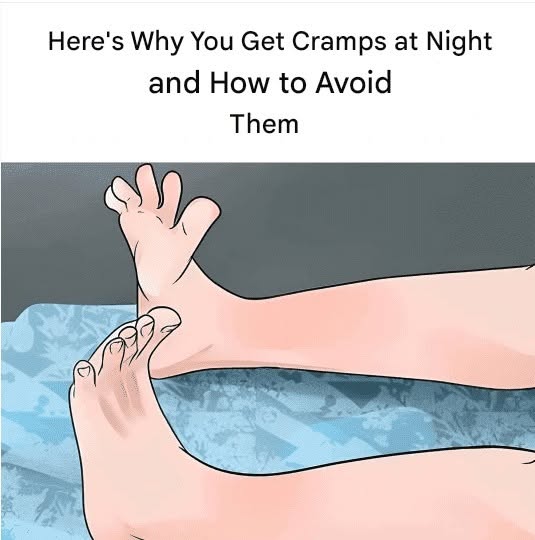
Why Do We Get Cramps at Night?Nighttime leg cramps are sudden, involuntary muscle contractions that often affect the calves, feet, or thighs. They can be painful and may wake you from sleep. Although they are common, the exact cause is not always clear.
Common reasons nighttime cramps happen
1. Muscle fatigue or overuse
- Long periods of standing, walking, exercise, or unusual activity can strain muscles and trigger cramps later.
2. Muscle shortening during sleep
- When you sleep, your feet and toes may naturally point downward, which can shorten calf muscles and make them more prone to spasms.
3. Dehydration
- Not drinking enough fluids can contribute to muscle irritability, especially after sweating or exercise.
4. Electrolyte imbalances
- Low levels of minerals such as potassium, calcium, or magnesium can contribute to cramps in some people, though many nighttime cramps are not caused by a deficiency.
5. Age-related changes
- Night cramps become more common with age due to changes in muscles, nerves, and circulation.
6. Certain medications
Some medicines, including some diuretics (“water pills”) and other medications, may increase the risk of cramps in some people.
What may help prevent them
- Stretch your calves gently before bed.
- Stay physically active and avoid sudden increases in exercise.
- Drink enough fluids throughout the day.
- Wear supportive footwear during the day.
- When a cramp occurs: gently straighten the leg, pull your toes toward you, and massage the muscle.
When cramps should be checked by a healthcare professional
Seek advice if cramps:
- Happen frequently or are getting worse
- Cause major sleep disruption
- Come with leg swelling, redness, warmth, or weakness
- Are associated with numbness or changes in walking ability
A common myth is that everyone with nighttime cramps simply needs magnesium. Magnesium helps when a person is deficient (and may help some pregnant people), but routine magnesium supplements do not reliably stop nighttime cramps for most adults.
If your cramps are mainly in your calves, feet, or thighs, and how often they occur, I can help narrow down the likely triggers.