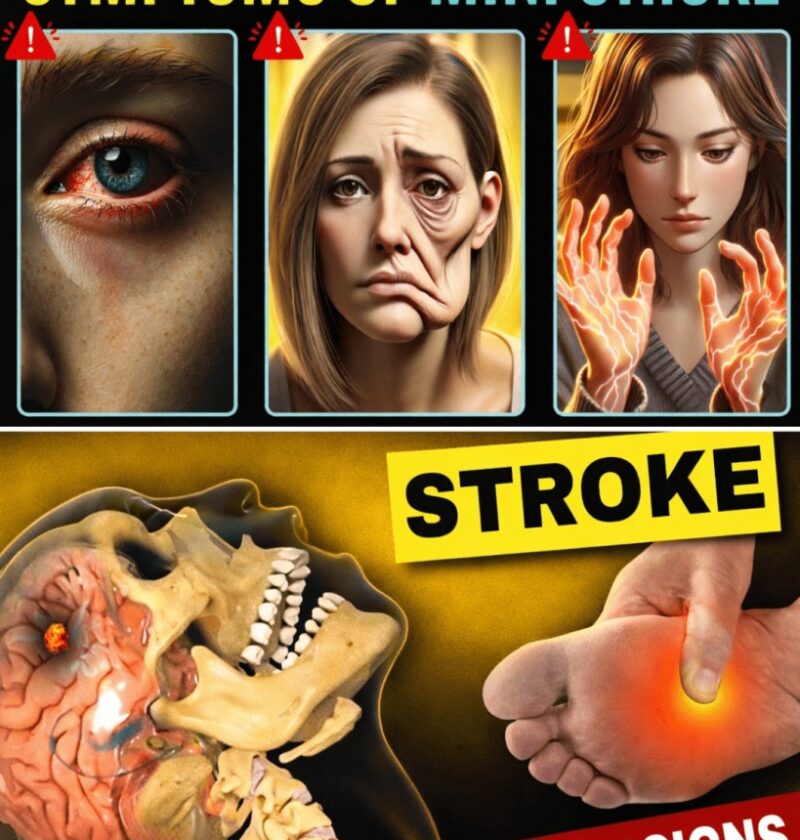
That headline is referring to a Transient ischemic attack (TIA), often called a “mini-stroke.” It’s not something to self-diagnose from a long checklist, but it is important because it can be an early warning sign of a future stroke.
A TIA happens when blood flow to part of the brain is briefly blocked, and symptoms usually resolve within minutes to hours.
First, the key idea
TIA symptoms are sudden, not gradual—and they usually affect one side of the body or specific functions.
Common warning signs (what doctors actually look for)
1. Face drooping
- One side of the face feels weak or looks uneven
2. Arm or leg weakness
- Sudden numbness or inability to lift one arm
3. Speech trouble
- Slurred speech
- Trouble finding words or understanding others
4. Vision changes
- Sudden loss of vision in one eye
- Blurred or double vision
5. Balance problems
- Sudden dizziness
- Trouble walking or coordination loss
Other possible (less obvious) symptoms people sometimes miss
6. Sudden confusion
7. Severe, unusual headache (less common in TIA than stroke)
8. Numbness on one side of the body
9. Trouble swallowing
10. Loss of coordination in one hand
Important clarification about “15 warning signs”
Viral lists often inflate symptoms into 15–20 items by splitting the same problem into variations (e.g., “left arm weakness,” “right arm weakness,” “tingling in arm,” etc.). Medically, it’s really the same core group of neurological deficits.
When it becomes an emergency
Even if symptoms go away in minutes, a TIA is an emergency warning. You should seek immediate medical care if any of these happen suddenly.
Why it matters
A TIA is often a serious warning sign of stroke risk in the near future, especially within days to months.
Bottom line
If symptoms are:
- sudden
- one-sided
- involve face, arm, speech, or vision
…treat it as urgent, even if it resolves.
If you want, I can explain how doctors distinguish TIA from things that mimic it (like migraine aura, low blood sugar, or anxiety).