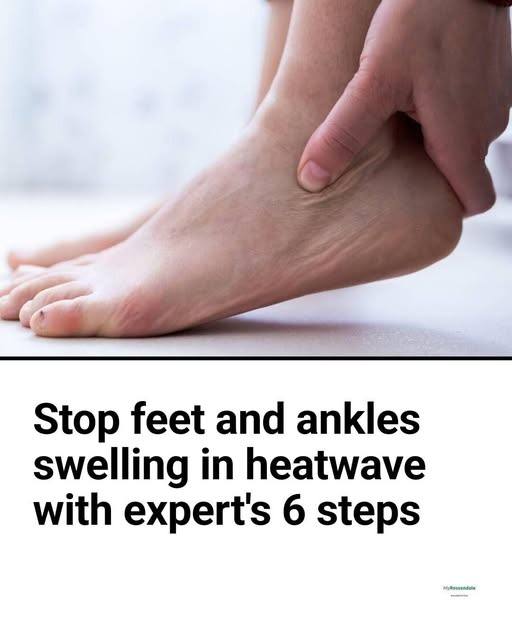
That headline is talking about a very common warm-weather issue called heat-related swelling (peripheral edema).
When temperatures rise, blood vessels expand and fluid can collect in the lower parts of the body—especially feet and ankles—because gravity pulls fluid downward.
Why it happens in a heatwave
In hot weather:
- Blood vessels dilate to help cool the body
- This makes it easier for fluid to leak into surrounding tissues
- Standing or sitting for long periods worsens it
- Mild dehydration can also affect circulation
This is usually temporary and harmless.
Who notices it more
- Older adults
- People who stand a lot (retail, cooking, travel)
- Pregnant people
- People with mild circulation issues
What can help
1. Elevate your legs
- Raise feet above heart level for 15–30 minutes
- Helps fluid return to circulation
2. Move regularly
- Walk around every 30–60 minutes if sitting/standing long
- Simple calf movements help pump fluid upward
3. Stay hydrated
- Dehydration can actually worsen fluid imbalance
4. Cool down your legs
- Cool showers or damp cloths can reduce vessel dilation
5. Wear loose clothing
- Avoid tight socks or restrictive shoes in heat
6. Reduce salt intake (mildly helpful)
- Too much salt can contribute to fluid retention
When to be concerned
Swelling should be checked if:
- It affects only one leg
- It’s painful, red, or warm
- It comes with shortness of breath or chest pain
- It doesn’t improve after cooling/rest
Bottom line
In a heatwave, mild ankle swelling is usually just your body reacting to heat and gravity—not a serious condition—but sudden or one-sided swelling should always be taken seriously.
If you want, I can explain how to tell “normal heat swelling” from signs of circulation or heart-related problems.