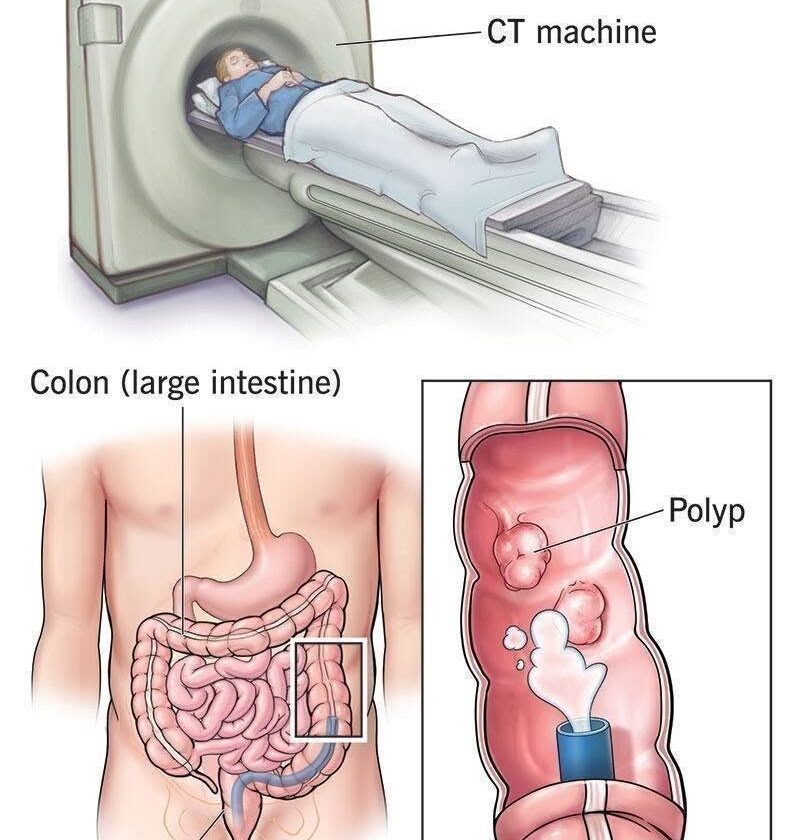
The headline “New method: colonoscopy will no longer be an invasive examination” is misleading if taken literally. A traditional colonoscopy is still an invasive procedure because it involves inserting a flexible camera through the rectum to examine the colon.
However, researchers and healthcare providers are developing or using less invasive alternatives in certain situations.
Possible alternatives
- Stool-based screening tests: These check for hidden blood or abnormal DNA in stool and are commonly used to screen for colorectal cancer in people at average risk. If the test is positive, a colonoscopy is usually needed to investigate further.
- CT colonography (virtual colonoscopy): This uses CT scans to create images of the colon. It is less invasive than a standard colonoscopy but still requires bowel preparation, and a traditional colonoscopy is needed if suspicious findings are detected.
- Colon capsule endoscopy: A person swallows a small camera capsule that takes images as it travels through the digestive tract. It may be an option for some patients, but it is not a replacement for colonoscopy in all cases.
Why standard colonoscopy is still important
A traditional colonoscopy remains the gold standard because it allows the doctor to:
- Examine the entire colon directly.
- Remove many polyps during the same procedure.
- Take tissue samples (biopsies) if needed.
Bottom line
While newer technologies are making colorectal screening less invasive for some people, they have not eliminated the need for conventional colonoscopy, especially when abnormalities are found or when treatment or biopsy is required. If you have a specific article or news story about a “new method,” I can explain what it actually involves and how it compares with standard colonoscopy.