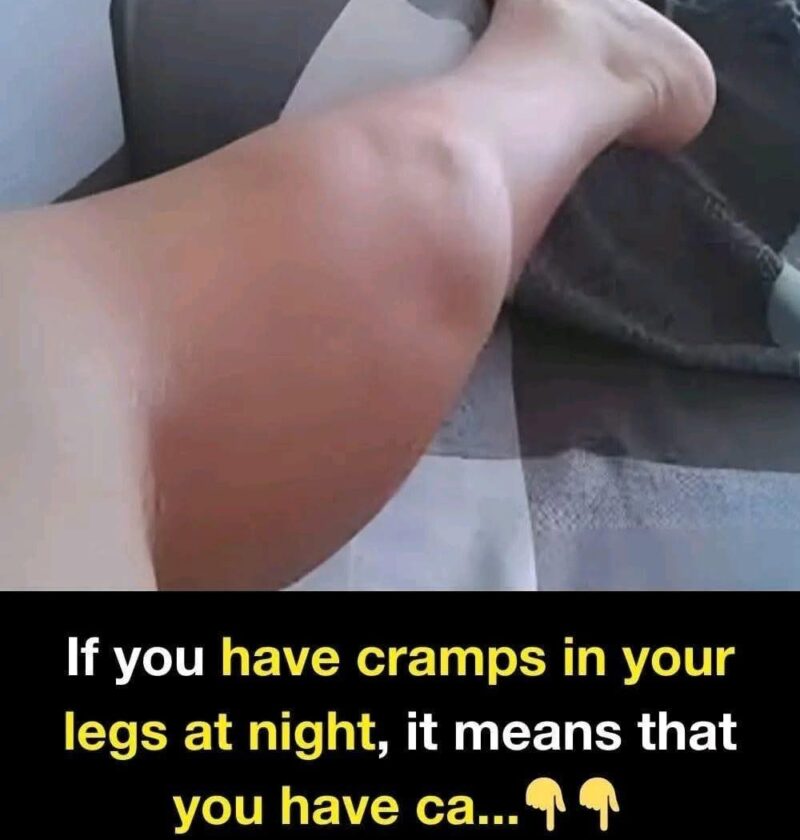
That headline is another simplified health-question format. The real answer is:
Night (nocturnal) leg cramps can affect many people, but certain groups are more likely to experience them.
🦵 Who is most at risk of night cramps?
1. Older adults (most common group)
- Risk increases significantly after age 50
- Reasons:
- reduced muscle flexibility
- poorer circulation
- more medication use
- natural nerve changes
2. Pregnant women
- Especially in the 2nd and 3rd trimester
- Possible causes:
- increased pressure on nerves and blood vessels
- mineral changes (calcium, magnesium shifts)
3. People with poor hydration or electrolyte imbalance
- Low levels of:
- potassium
- magnesium
- calcium
- Often linked to:
- heavy sweating
- dehydration
- diarrhea or vomiting
4. People who sit or stand for long hours
- Long immobility affects blood flow and muscle fatigue
- Common in:
- office workers
- drivers
- people on their feet all day
5. Athletes or physically active individuals
- Muscle fatigue after exercise
- Overuse or poor stretching can trigger cramps at night
6. People with certain medical conditions
Higher risk if you have:
- diabetes (nerve damage/neuropathy)
- kidney disease
- circulation problems
- nerve disorders
7. Medication users (important but often overlooked)
Some medications can increase risk, such as:
- diuretics (water pills)
- certain blood pressure medications
- statins (in some cases)
⚠️ Important reality check
Night cramps are usually:
- harmless but painful
- not a sign of a dangerous disease in most cases
But frequent or severe cramps may need evaluation.
💡 What actually helps prevent them
- Gentle calf stretching before bed
- Staying hydrated
- Magnesium or potassium intake (if deficient)
- Light activity during the day
- Avoiding long immobility
🚨 When to see a doctor
- Cramps are frequent and worsening
- Associated with swelling, numbness, or weakness
- One leg is consistently worse (possible circulation issue)
Bottom line
The headline means:
“Night cramps are more common in older adults, pregnant women, and people with lifestyle or medical factors that affect muscles, nerves, or circulation.”
If you want, I can also show you a quick 30-second stretch that actually reduces night cramps for many people.