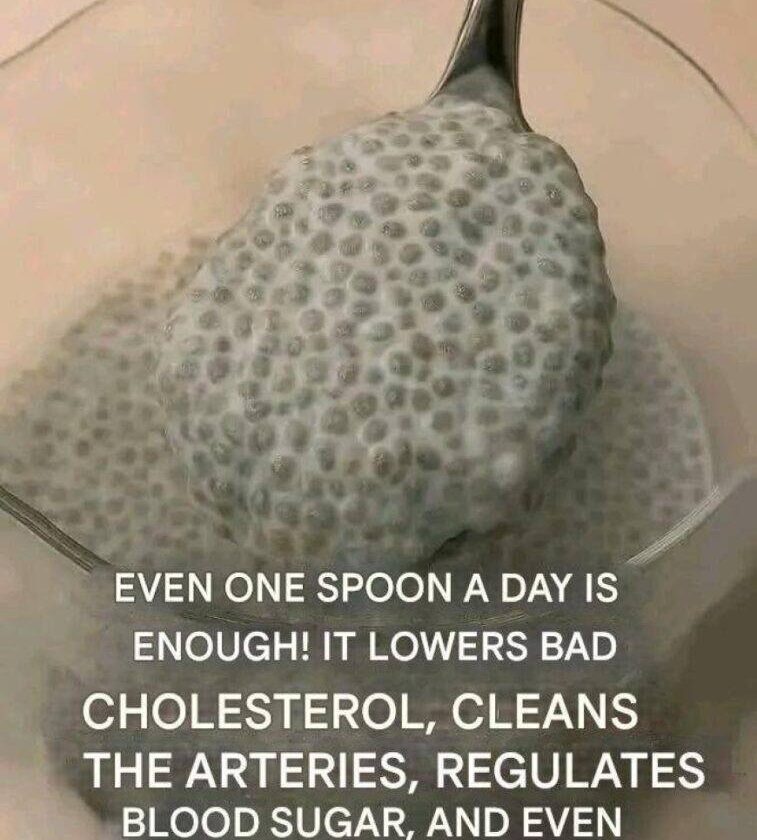
That claim is not medically accurate. It’s a classic “one spoon a day fixes everything” style health exaggeration.
No single spoonful of any food reliably:
- “cleans arteries”
- “removes bad cholesterol”
- “regulates blood sugar”
- “suppresses hunger in a meaningful clinical way”
Those processes are controlled by overall diet, metabolism, hormones, and long-term lifestyle—not one daily ingredient.
Where this kind of claim usually comes from
People often take real properties of a food and stretch them far beyond evidence. For example, if the “spoonful” is something like oil, seeds, or vinegar, they may contain compounds that slightly affect metabolism—but not in the dramatic way described.
What science actually supports
- Cholesterol and arteries: improved by long-term patterns (fiber intake, reduced saturated fats, exercise, sometimes medication like statins—not a single food)
- Blood sugar: affected by overall carb quality, portion size, activity, and insulin function
- Hunger control: influenced by protein, fiber, and total calories—not a magical daily dose of one item
What does help (realistically)
If the goal is heart and metabolic health:
- soluble fiber (oats, legumes)
- nuts in controlled portions
- regular physical activity
- weight management if needed
- reducing ultra-processed foods and added sugars
Bottom line
A “one spoon a day cures everything” claim is almost always marketing or viral misinformation. If it were that simple, it would be standard medical advice worldwide.
If you tell me what specific ingredient the post is talking about, I can break down what it actually does and whether there’s any real evidence behind it.