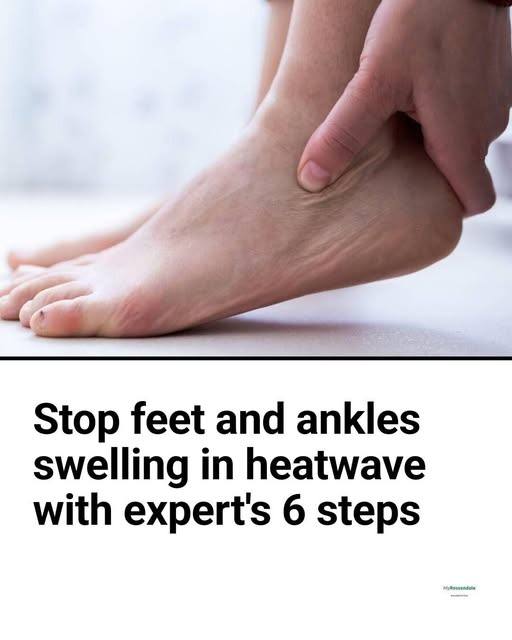
That headline is referring to a common effect of hot weather: heat-related swelling in the feet and ankles.
When it’s hot, blood vessels widen to help the body cool itself. This can allow more fluid to collect in the lower legs and feet, especially when sitting or standing for long periods.
What may help
🦵 Elevate your legs
- Raise your feet above heart level when resting.
- This helps fluid move back into circulation.
🚶 Keep moving
- Take short walks.
- Flex and extend your ankles and calves regularly.
- Movement helps the leg muscles pump fluid upward.
💧 Stay hydrated
- Drinking enough water helps your body regulate fluids more effectively.
- Dehydration can sometimes worsen swelling.
❄️ Cool your body
- Stay in the shade or air conditioning when possible.
- Cool showers or cool compresses can provide relief.
👟 Wear comfortable footwear
- Tight shoes and socks can make swelling more uncomfortable.
- Choose breathable, well-fitting footwear.
🧂 Watch excessive salt intake
- High sodium intake can contribute to fluid retention in some people.
When swelling may be more than the heat
Seek medical advice if:
- swelling affects only one leg
- the leg is red, warm, or painful
- swelling appears suddenly
- you develop shortness of breath or chest pain
- the swelling persists despite rest and cooling
These can be signs of more serious conditions that need prompt evaluation.
Bottom line
Mild swelling of the feet and ankles during hot weather is common and is often related to the body’s normal cooling response. Elevating the legs, staying hydrated, moving regularly, and keeping cool can help. However, new, severe, one-sided, or persistent swelling should be assessed by a healthcare professional.