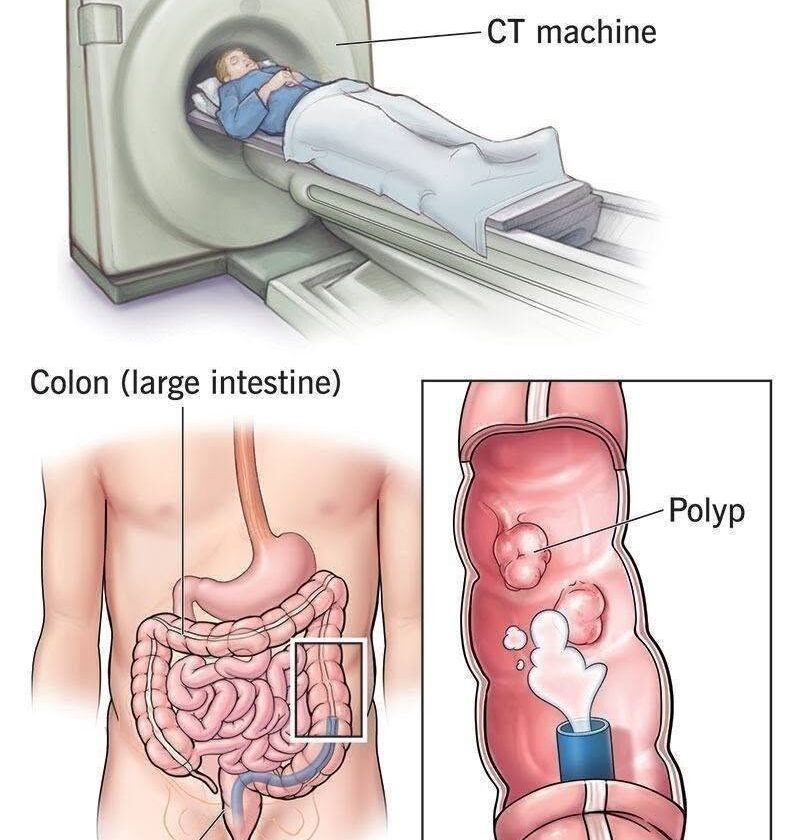
The claim “New method: colonoscopy will no longer be an invasive examination” is likely an oversimplification. There are newer, less-invasive colorectal screening methods, but they have not completely replaced colonoscopy.
What alternatives exist?
1. Stool-based screening tests
- These tests look for signs such as hidden blood or abnormal DNA in stool samples.
- They are non-invasive and can often be done at home.
- If results are abnormal, a colonoscopy is usually needed for further evaluation.
2. CT colonography (“virtual colonoscopy”)
- Uses CT imaging to create pictures of the colon.
- It avoids inserting a traditional camera into the colon, but it still requires bowel preparation and may involve placing air or gas into the colon.
- If polyps are found, a regular colonoscopy is needed to remove them.
3. Capsule-based tests
- A person swallows a small camera capsule that passes through the digestive tract.
- These technologies are developing, but they are not a universal replacement for colonoscopy.
Why colonoscopy is still important
A standard colonoscopy allows doctors to:
- Examine the entire colon directly.
- Detect abnormal growths.
- Remove polyps during the same procedure.
- Take tissue samples (biopsies) if needed.
For many people, especially those at higher risk or with abnormal screening results, colonoscopy remains an important diagnostic and preventive tool.
If the post you saw mentions a specific “new method” (for example, a capsule camera, blood test, or AI-based screening), share the name and I can explain how it compares with traditional colonoscopy.