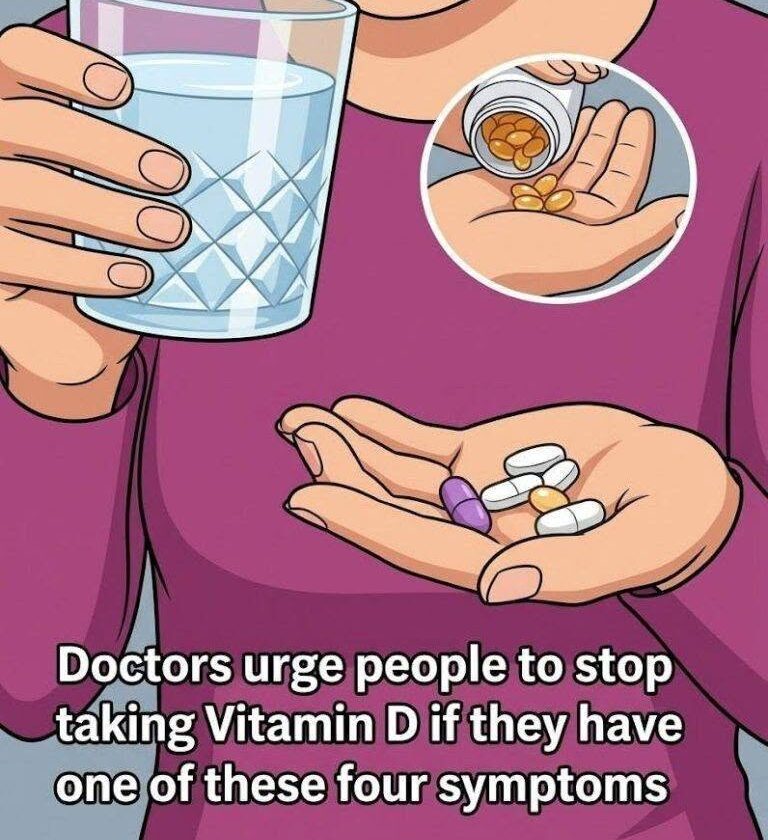
That headline is misleading. There is no general medical advice telling people to stop taking Vitamin D based on a generic list of four symptoms.
However, too much vitamin D—usually from high-dose supplements rather than food or sunlight—can cause Vitamin D toxicity. This happens because excess vitamin D raises calcium levels in the blood.
Symptoms that may suggest vitamin D toxicity include:
- Nausea and vomiting
- Excessive thirst and frequent urination
- Weakness or unusual fatigue
- Confusion or changes in mental status
- Constipation
- Loss of appetite
These symptoms are not specific to vitamin D toxicity and can have many other causes. If someone taking high-dose vitamin D develops them, they should contact their healthcare provider promptly rather than simply assuming vitamin D is the cause.
Who is at higher risk?
Vitamin D toxicity is uncommon and is most often caused by:
- Taking very high-dose vitamin D supplements for weeks or months
- Accidental overdose
- Errors in supplement dosing
It is not usually caused by normal dietary intake or sun exposure.
What should you do?
- Take vitamin D only at the dose recommended by your healthcare provider or according to the product label unless you’ve been prescribed a higher dose.
- If you’re taking high-dose vitamin D and develop concerning symptoms, seek medical advice. Your clinician may recommend blood tests to check your calcium and vitamin D levels.
Bottom line: The claim “stop taking vitamin D immediately if you have these four symptoms” is an oversimplification. The real concern is vitamin D toxicity from excessive supplementation, which is uncommon but can be serious if it occurs. The right response is to get medical advice and appropriate testing, not to rely on a viral headline.