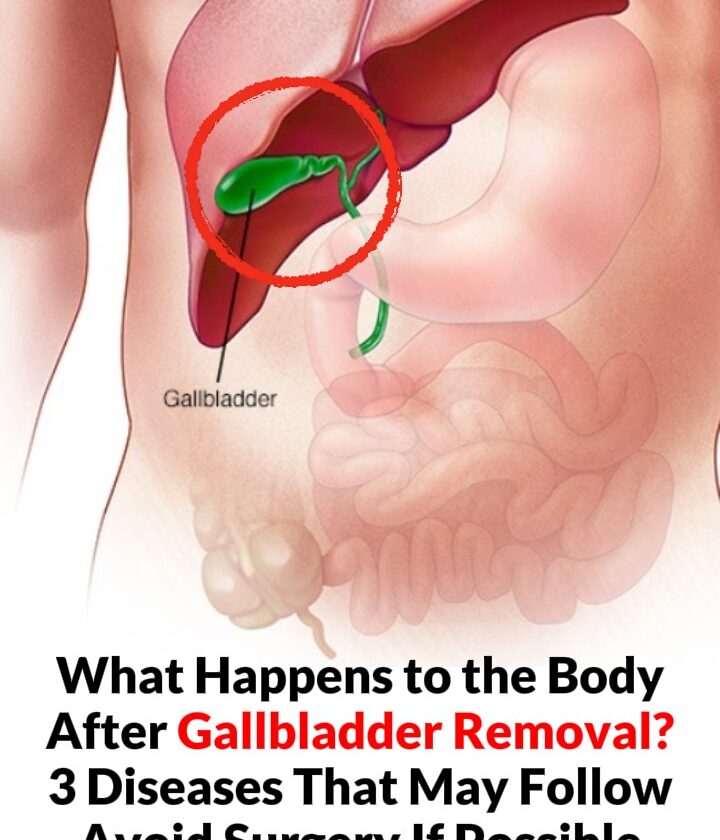
That headline is misleading. It implies that gallbladder removal commonly causes several diseases and that surgery should generally be avoided. In reality, gallbladder removal is often performed because the risks of the underlying gallbladder problem outweigh the risks of surgery.
The procedure is called Cholecystectomy.
What happens after gallbladder removal?
The gallbladder stores and concentrates bile. After surgery:
- The liver still produces bile.
- Bile flows directly into the intestine instead of being stored.
- Most people digest food normally and live healthy lives without a gallbladder.
Common short-term effects
Digestive changes
Some people experience:
- diarrhea
- bloating
- gas
- urgency after fatty meals
These symptoms are often temporary and improve over weeks to months.
Conditions that can occur after surgery
1. Post-cholecystectomy diarrhea
A minority of people develop ongoing diarrhea due to changes in bile flow.
2. Bile reflux
Some individuals may experience irritation of the stomach or esophagus from bile, though it is much less common than acid reflux.
3. Digestive discomfort with fatty foods
Certain people remain more sensitive to large, high-fat meals.
What the headline gets wrong
There are no specific “three diseases that always follow” gallbladder removal. Most patients:
- recover well
- have improved symptoms
- do not develop serious long-term complications
When surgery is usually recommended
Doctors generally consider surgery when someone has problems such as:
- symptomatic gallstones
- recurrent gallbladder attacks
- gallbladder inflammation
Relevant conditions include:
- Gallstones
- Cholecystitis
Untreated gallbladder disease can sometimes lead to serious complications, including infection or inflammation of the pancreas.
Bottom line
Gallbladder removal can cause digestive changes in some people, but the claim that several diseases routinely follow surgery is inaccurate. When a healthcare professional recommends gallbladder removal, it’s usually because the benefits outweigh the risks. The decision should be based on the individual’s condition rather than a blanket rule to “avoid surgery if possible