Poor sleep can sometimes be linked to high blood sugar (hyperglycemia), especially in people with diabetes or insulin resistance. However, these signs are not proof of high blood sugar by themselves—many other conditions can cause similar symptoms.
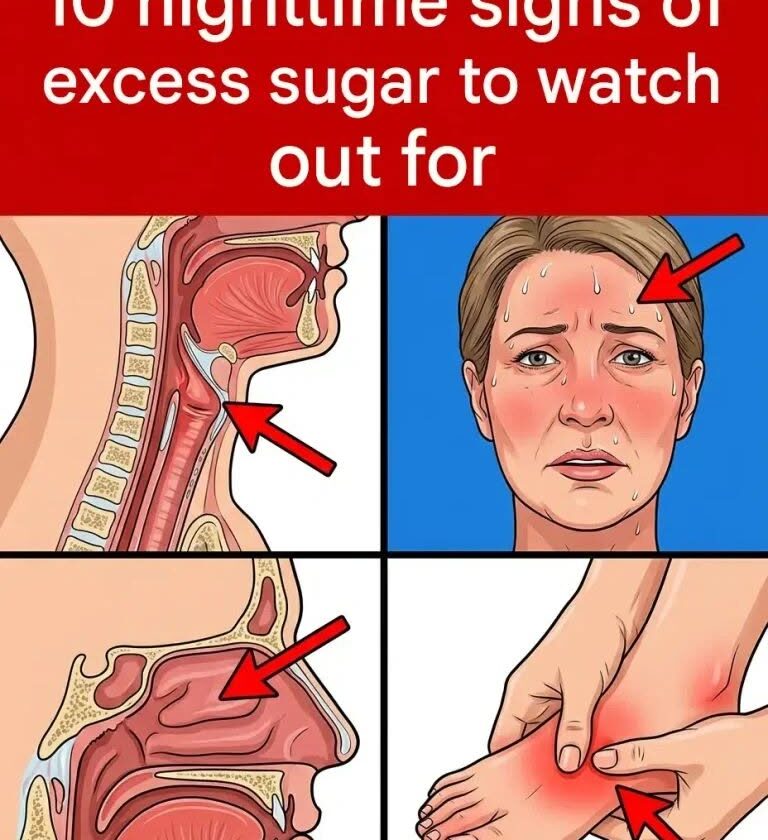
10 nighttime signs that may be associated with high blood sugar
- Frequent nighttime urination
- Excess glucose in the blood can make the kidneys remove more water, leading to more trips to the bathroom.
- Excessive thirst at night
- Fluid loss from frequent urination can cause increased thirst.
- Dry mouth
- Dehydration from elevated blood sugar may leave the mouth feeling dry.
- Night sweats
- Blood sugar swings (including lows in people taking diabetes medicines) can sometimes trigger sweating.
- Restless or poor-quality sleep
- Blood sugar fluctuations may interfere with normal sleep patterns.
- Waking up unusually tired
- High blood sugar can contribute to fatigue even after a full night in bed.
- Leg discomfort or cramps
- Nerve changes related to diabetes may contribute to tingling, burning, or discomfort in the legs.
- Blurred vision upon waking
- Changes in blood glucose levels can temporarily affect the eyes’ ability to focus.
- Increased hunger at night
- The body may struggle to use glucose properly, leading to feelings of hunger despite eating.
- Snoring or breathing problems during sleep
- Sleep apnea is more common in people with obesity and type 2 diabetes and can worsen blood sugar control.
When to check your blood sugar
Consider discussing testing with a healthcare professional if you have:
- Increased thirst and urination
- Unexplained weight loss
- Persistent fatigue
- Family history of diabetes
- High blood pressure or high cholesterol
A simple blood test such as fasting glucose or HbA1c can help determine whether blood sugar levels are in a healthy range. If you have diabetes and experience very high readings, confusion, vomiting, or severe weakness, seek medical advice promptly.