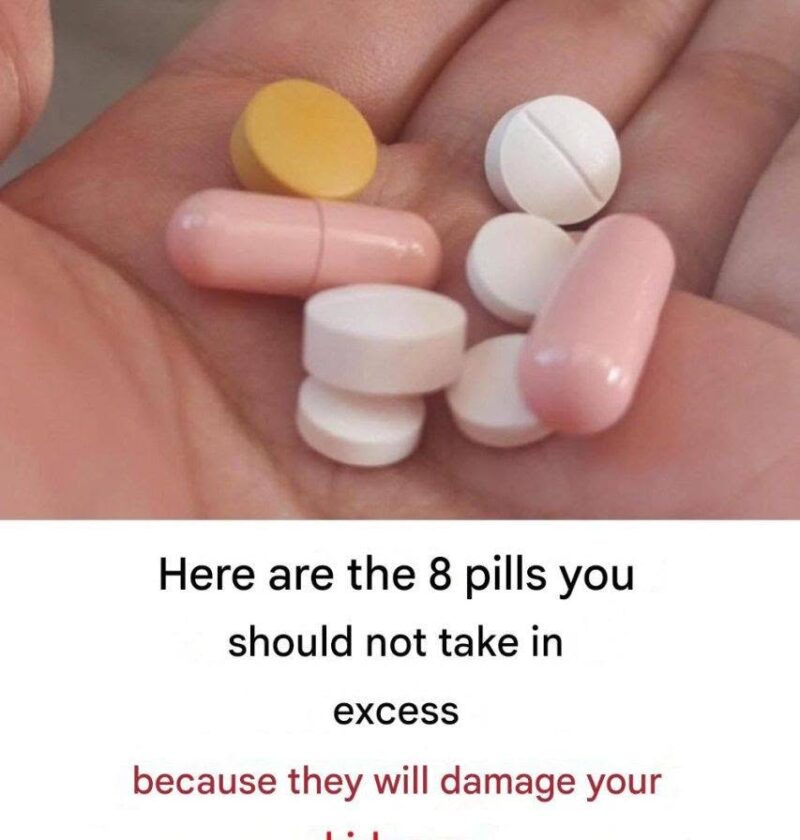
The claim that there are “eight pills you shouldn’t take because they damage your kidneys” is too broad. Many medications can affect kidney function in certain people, but that does not mean everyone should avoid them. The risk depends on the medicine, dose, duration, hydration, age, and existing kidney health.
Some types of medicines that doctors commonly review for possible kidney effects include:
1. Nonsteroidal anti-inflammatory drugs (NSAIDs)
Examples: ibuprofen, naproxen
- Frequent or high-dose use can reduce blood flow to the kidneys and may contribute to kidney injury, especially in people with kidney disease, dehydration, heart failure, or older age.
2. Certain antibiotics
Some antibiotics can stress the kidneys or require dose adjustments when kidney function is reduced.
3. Some blood pressure medicines
- ACE inhibitors and ARBs can change kidney blood flow and potassium levels.
- They are often protective for many people with kidney disease, but kidney function and potassium need monitoring.
4. Diuretics (“water pills”)
- Used for blood pressure and heart conditions.
- Can affect fluid balance and electrolytes, especially if someone becomes dehydrated.
5. Certain acid-reducing medicines
Some proton pump inhibitors (PPIs) have been associated in studies with kidney problems in some users, though the overall risk is considered low.
6. Some antiviral or immune-suppressing medicines
Certain drugs used for infections or autoimmune conditions may require kidney monitoring.
7. Lithium
- A medication used for some mental health conditions.
- Long-term use can affect kidney function and requires regular blood tests.
8. Some contrast agents and other medical drugs
Certain substances used in imaging or procedures can affect kidneys in higher-risk patients.
Protect your kidneys:
- Avoid taking painkillers regularly without medical advice.
- Stay hydrated, especially during illness or hot weather.
- Tell healthcare providers about all medicines and supplements you use.
- Get kidney function tests if you have diabetes, high blood pressure, or kidney risk factors.
Do not stop prescribed medicines on your own. If you tell me the names of the pills you take, I can help explain which ones may need kidney monitoring and why.